


Illicit Drugs

Collection Contents
8 resultados
-
-
Autoridades nacionales competentes en virtud de los tratados de fiscalización internacionales de drogas 2022
Más MenosEste directorio enumera las autoridades nacionales competentes facultadas para expedir certificados y autorización para la importación y exportación de estupefacientes y sustancias psicotrópicas; y las autoridades nacionales competentes facultadas para regular o hacer cumplir los controles nacionales de precursores y químicos esenciales; Los organismos internacionales que podrían ayudar a las autoridades nacionales competentes en caso de que ninguna autoridad está en la lista para un país o región, o en contacto caso no se puede establecer con las autoridades de la lista. El directorio también incluye información de contacto de las autoridades competentes nacionales o de organismos internacionales y se emite anualmente. Introducciones en árabe, chino, Inglés, francés, ruso y español.
-
-
-

Estupefacientes 2024
Previsiones de las necesidades mundiales para 2025 – Estadísticas de 2023
Más MenosEl preámbulo de la Convención Única de 1961 destaca la preocupación de los Estados por la salud y el bienestar de la humanidad. Esta afirmación fundamental es seguida por el reconocimiento del uso médico de los estupefacientes y su papel indispensable en el alivio del dolor para el cual los países necesitan asegurar la disponibilidad y proporcionar la provisión adecuada. Estos principios se reafirmaron en el Convenio sobre Sustancias Psicotrópicas de 1971 en el que se agregó que, si bien era necesario restringir el uso de sustancias controladas a fines legítimos, su disponibilidad no debería haberse restringido indebidamente. Después de casi sesenta años desde la proclamación oficial, el objetivo de asegurar la disponibilidad aún es difícil de alcanzar en muchos países donde las personas aún sufren o mueren de dolor o no tienen acceso a los medicamentos que necesitan. El des quilibrio en la disponibilidad de analgésicos opioides es particularmente preocupante, ya que los datos muestran que muchas de las afecciones que requieren manejo del dolor, en particular el cáncer, son prevalentes y aumentan en los países de ingresos bajos y medios.
-
-
-
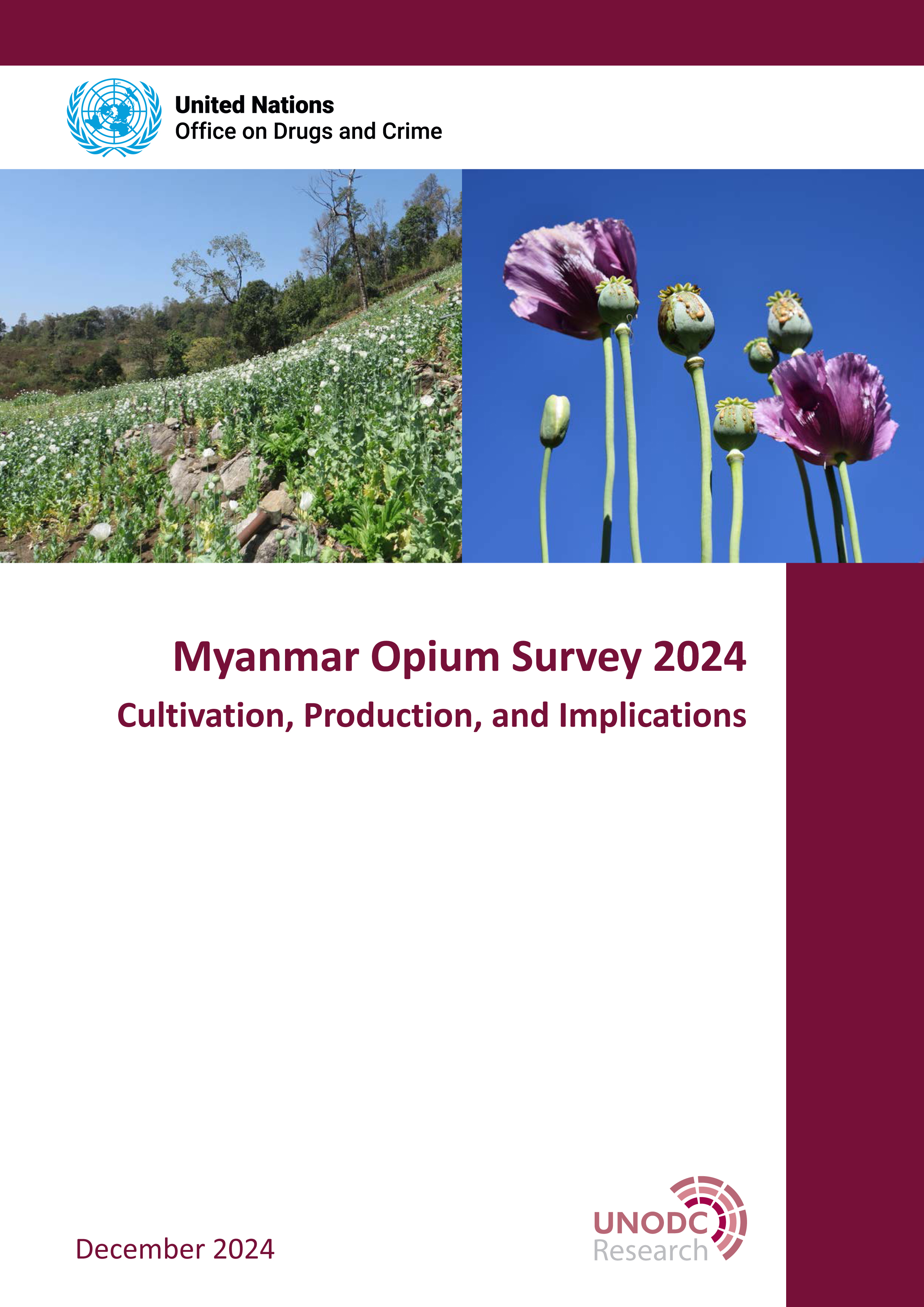
Myanmar Opium Survey 2024
Cultivation, Production, and Implications
Más MenosThree years after the military takeover in Myanmar, poppy cultivation has stabilized at recent high levels, suggesting that the internal conflict remains a critical factor in illicit cultivation in Myanmar. The 2024 survey points to a slowing down of cultivation, with a slight decrease of 4% to 45,200 ha from 47,100 ha in 2023. Although area under cultivation has not returned to peaks reached in 2013 at nearly 58,000 ha, poppy cultivation remains robust. Historically, illicit poppy cultivation in Myanmar, and Southeast Asia in general, was typically of small, poorly organized, and sparse plots. Field and ethnographic research point to longstanding traditions of small-scale poppy cultivation, sometimes as a cash or insurance crop, but also for household use. However, in recent years, cultivation in Myanmar shifted toward more sophisticated practices that increased yields. National yield estimates from 2022’s survey indicated an average of 19.8kg of opium per hectare of poppy, which was a substantial increase from 14kg per hectare in 2021. In 2023, the national yield estimate rose again to 22.9kg per hectare—the highest ever recorded by UNODC. By 2024, yields declined slightly by 4% to 22kg/hectare.
-
-
-
Sustancias sicotrópicas 2024
Estadísticas de 2023 - Previsiones de las necesidades anuales para fines médicos y científicos para 2025
Más MenosAnualmente, la Sección de Control de Psicotrópicos de la secretaría de la Junta Internacional de Fiscalización de Estupefacientes (JIFE) publica un informe técnico que proporciona una visión general de la fabricación, exportación, importación, existencias y consumo lícitos en todo el mundo de sustancias controladas en virtud del Convenio sobre Sustancias Sicotrópicas de 1971. Además de proporcionar cifras específicas sobre los movimientos de muchas sustancias catalogadas, el informe incluye comentarios sobre las tendencias emergentes y actuales en el mercado lícito de sustancias sicotrópicas bajo fiscalización internacional.
-
-
-
Precursors, Chemicals and Equipment Frequently Used in the Illicit Manufacture of Narcotic Drugs and Psychotropic Substances 2024
Más MenosThe Board prepares this report in accordance with the following provisions contained in article 12 of the United Nations Convention against Illicit Traffic in Narcotic Drugs and Psychotropic Substances of 1988. The Board shall prepare an annual report on its work containing an analysis of the information at its disposal and, in appropriate cases, an account of the explanations, if any, given by or required of Parties, together with any observations and recommendations which the Board desires to make. The Board may make such additional reports as it considers necessary. The reports shall be submitted to the [Economic and Social] Council through the Commission which may make such comments as it sees fit. The reports of the Board shall be communicated to the Parties and subsequently published by the Secretary-General. The Parties shall permit their unrestricted distribution.
-
-
-

Transnational Organized Crime in the Pacific: Expansion, Challenges and Impact
Más MenosThis report provides a detailed analysis of the rapidly evolving organized crime landscape and related drivers. It highlights how foreign criminal groups are capitalizing on the region’s geographic isolation, infiltrating legitimate businesses and using new technologies to advance their illicit operations while evading law enforcement. The report reveals that foreign crime syndicates, primarily from Asia and the Americas, are exploiting the Pacific’s strategic location to traffic illicit drugs and other contraband. The region’s isolation, once considered a barrier, now provides these groups with opportunities to operate in less-patrolled waters, facilitating large-scale shipments through ship-to-ship transfers. UNODC’s research also brings to the forefront the alarming rise in methamphetamine use across several Pacific countries, particularly Fiji, Papua New Guinea and Tonga, posing significant public health risks. The report calls for enhanced regional collaboration and coordination among Pacific Island Countries and Territories, noting that limited resources and capacities make it difficult for these nations to tackle transnational crime alone.
-
-
-
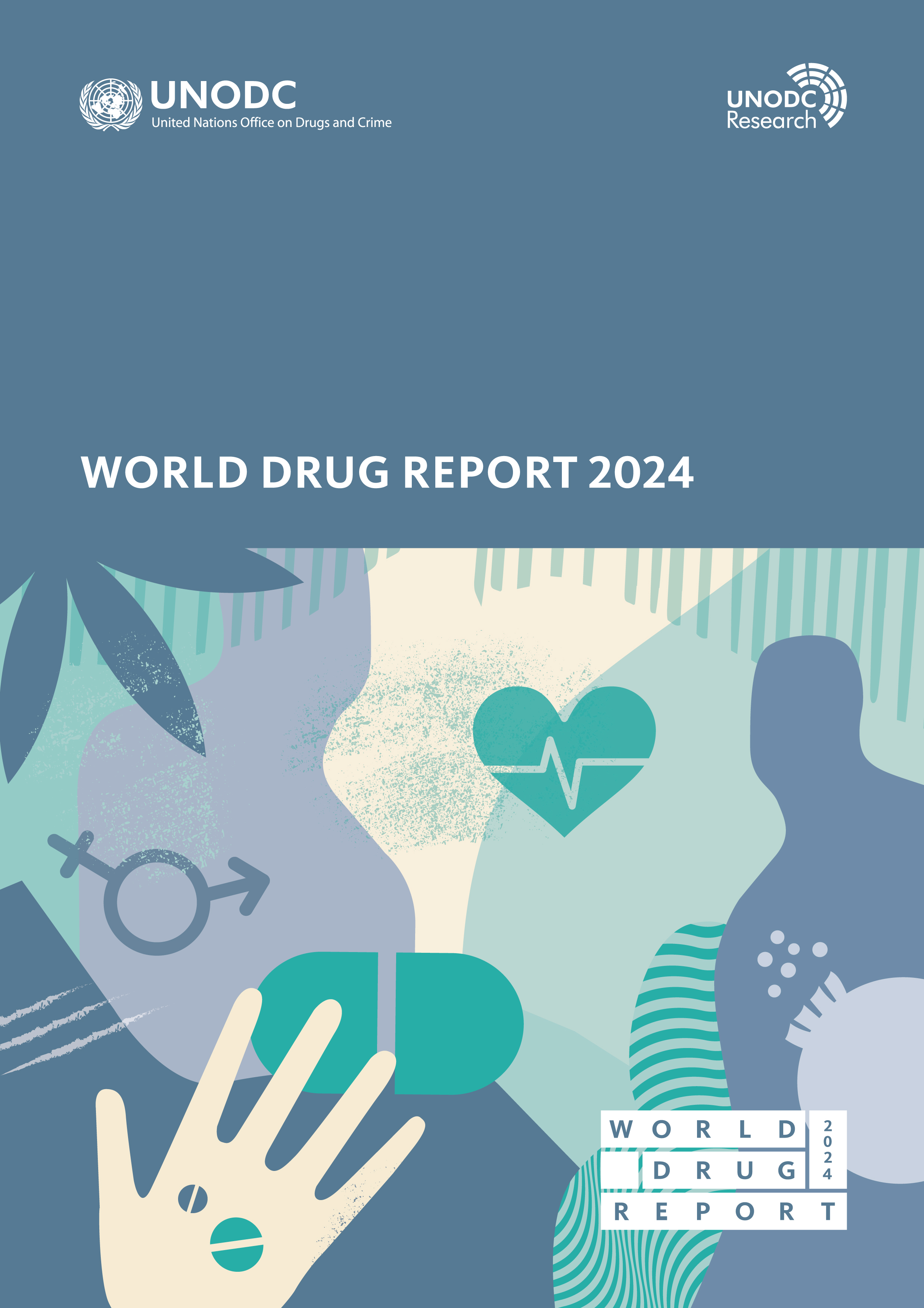
World Drug Report 2024
Más MenosA global reference on drug markets, trends and policy developments, the World Drug Report offers a wealth of data and analysis. The Key findings and conclusions booklet provides an overview of selected findings, while the Special points of interest offers a framework for the main takeaways and policy implications that can be drawn from those findings. As well as providing an in-depth analysis of key developments and emerging trends in selected drug markets, the Contemporary issues on drugs booklet looks at several other developments of policy relevance. The World Drug Report 2024 is aimed not only at fostering greater international cooperation to counter the impact of the world drug problem on health, governance and security, but also at assisting Member States in anticipating and addressing threats posed by drug markets and mitigating their consequences.
-
-
-

World Drug Report 2025
Más MenosA global reference on drug markets, trends and policy developments, the World Drug Report offers a wealth of data and analysis and in 2025 comprises several elements tailored to different audiences. Key findings provide an overview of selected findings from the analysis presented in Drug market patterns and trends and the thematic chapters of Contemporary issues on drugs, while Special points of interest offer a framework for the main takeaways and policy implications that can be drawn from those findings. The World Drug Report 2025 is aimed not only at fostering greater international cooperation to counter the impact of the world drug problem on health, governance and security, but also at assisting Member States in anticipating and addressing threats posed by drug markets and mitigating their consequences.
-