- E-ISSN: 24119873
-
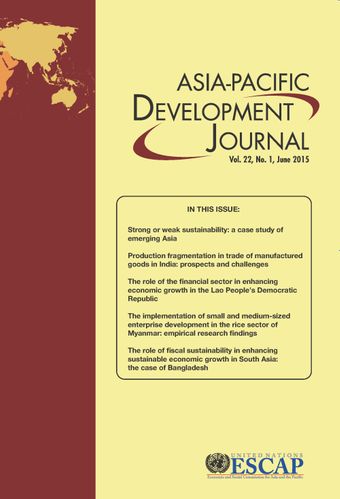
The role of fiscal sustainability in enhancing sustainable economic growth in South Asia: The case of Bangladesh
- Source: Asia-Pacific Development Journal, Volume 22, Issue 1, Apr 2016, p. 143 - 164
-
- 27 Apr 2016
Abstract
The present paper examines the role of fiscal sustainability in achieving sustainable economic growth in the context of South Asia. Excessive government debts have long-term implications and can cause serious intergenerational consequences. In this paper, the role of fiscal sustainability is discussed and the concept of a just tax system is analysed. Such a tax system can play an important role in achieving economic growth that is sustainable, rather than being focused on short-term gain. Using the case of Bangladesh, the paper highlights some of the key imminent challenges to transforming a tax system to be more equitable and fair. It finds that current taxation systems are based on short-term frameworks and can leave future generations with the ultimate burden of dealing with the limitations of those systems. Based on the case study, which supports those facts, policymakers in South Asian countries could integrate longterm measures to ensure fiscal sustainability in achieving sustainable economic development.
© United Nations