No Escape II: The Way Forward - Bringing Climate Solutions to the Frontlines of Conflict and Displacement
Abstract
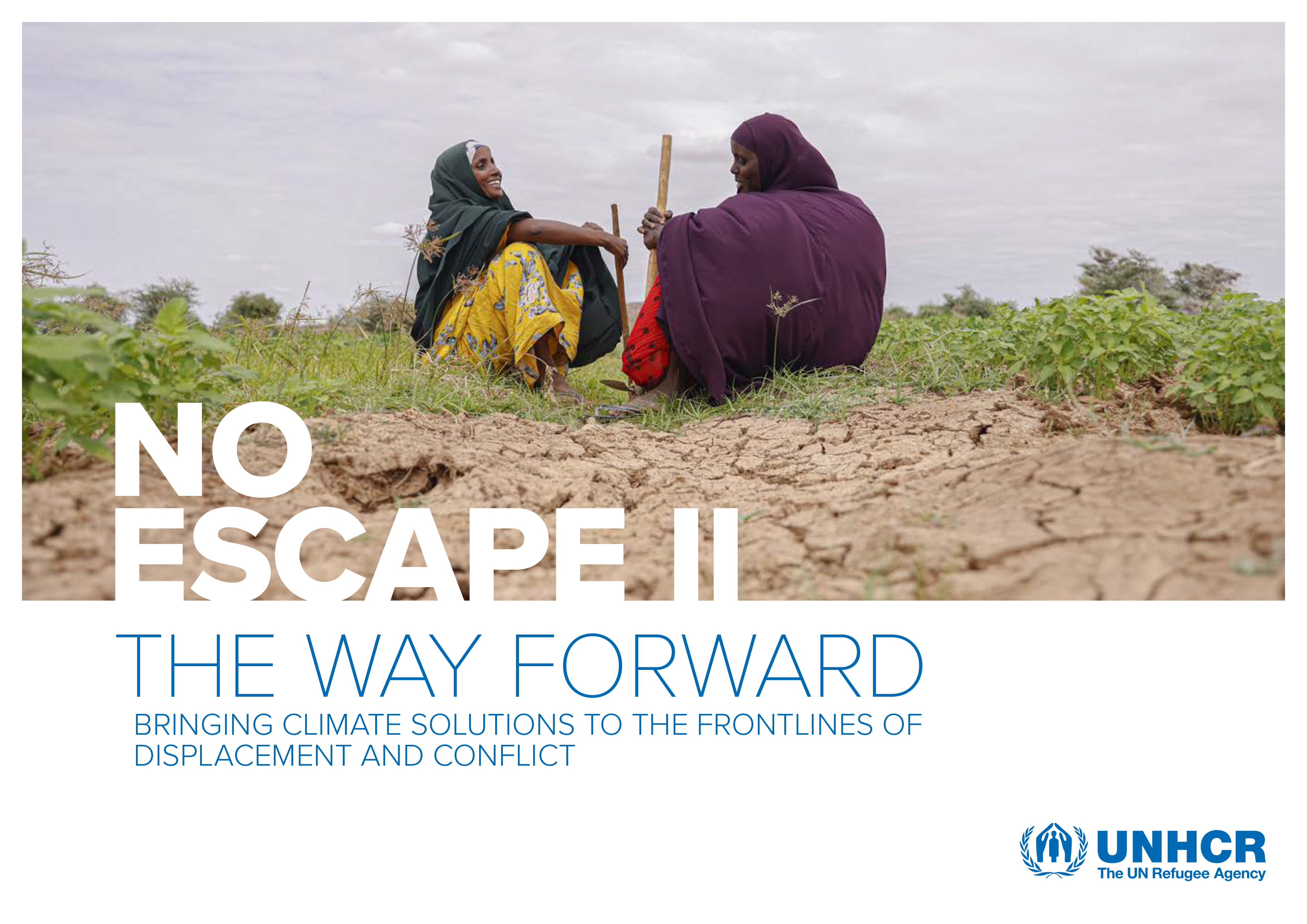
This report warns that climate shocks are undermining chances of recovery, increasing humanitarian needs, and amplifying the risks of repeated displacement. By mid-2025, 117 million people had been displaced by war, violence and persecution. Three in four of them are living in countries facing high-to-extreme exposure to climate-related hazards. Over the past 10 years, weather-related disasters have caused some 250 million internal displacements – equivalent to around 70,000 displacements per day. Whether it is floods sweeping South Sudan and Brazil, record-breaking heat in Kenya and Pakistan, or water shortages in Chad and Ethiopia, extreme weather is pushing already fragile communities to the brink. Environmental degradation is deepening the challenges communities are facing. New data in the report reveals that three-quarters of Africa’s land is deteriorating, and more than half of the continent’s settlements for refugees and internally displaced people are located in areas under severe ecological stress. This is shrinking access to food, water and income. In parts of the Sahel, communities report that climate-linked livelihood losses are driving recruitment into armed groups, showing how environmental stress can fuel cycles of conflict and displacement.