


81 - 100 of 1523 results
-
-
SME Competitiveness Outlook 2025
More LessThis SME Competitiveness Outlook sets out what a digital transformation looks like for small and medium-sized enterprises. Featuring insights from the International Trade Centre’s new Enterprise Digital Transformation Index, a metric that assesses how firms are adopting new technologies, it shows what challenges or circumstances may hold these businesses back in an increasingly digital age. The report also identifies the key enablers for firms to digitally transform– infrastructure, skills and regulations – while setting out what they can do when these enablers are absent to make up for what the environment lacks. The report unveils a Digital Transformation Action Plan for decision makers at the national and international levels. This roadmap provides a menu of options that decision makers can adopt depending on a country’s needs and circumstances – and reflects the key elements that must be in place to ensure that firms can benefit fully from the digital economy, and that no one is left behind.
-
-
-
Smuggling of Migrants in the Sahel
More LessThe analysis in this report is based on both quantitative and qualitative sources. The quantitative data come from the ongoing data collection system in West Africa of the Mixed Migration Centre, which provides primary data on migration flows by surveying refugees and migrants, as well as smugglers and facilitators, along frequently used migration routes and in major hubs for migration. The migrant smuggling business is multifaceted, even at the individual level. The vast majority of smugglers surveyed reported having multiple responsibilities in the smuggling process, with an overall average of four responsibilities each. Many of them also work in multiple countries: almost half of the smugglers surveyed operate in more than one country and one in five do so in four or more countries. Some refugees and migrants are subjected to exploitation and abuse during their migration journey through the Central Sahel, whether or not that journey is undertaken with smugglers. However, smugglers are less frequently cited as being perpetrators of exploitation and abuse than border officials, security forces, armed groups and criminal gangs.
-
-
-

Social and Economic Situation of Palestinian Women and Girls: July 2020–June 2022
More LessThe present report reviews the situation of Palestinian women and girls during the period July 2020–June 2022, focusing on political, social, economic and human rights developments. Building on research by the United Nations Economic and Social Commission for Western Asia (ESCWA) on the status of Palestinian women and girls, and drawing upon the most recent data, the present report highlights the complex situation of women and girls, revealing both progress and setbacks in the context of the Israeli occupation of the West Bank, including East Jerusalem, and of the Gaza blockade. Palestinian women and girls also continued to face entrenched discrimination and rights violations within their own society in the context of traditional patriarchal norms, inequitable power dynamics, and stalled progress of the State of Palestine in aligning national legislation and policies with the Convention on the Elimination of All Forms of Discrimination against Women (CEDAW), which is in part due to the fragmentation of the Palestinian territory and the inability to convene the Palestinian Legislative Council. Despite several measures implemented by the Government of Palestine over the reporting period, including the launch of the second National Action Plan on Women, Peace and Security, violence against women and girls remains prevalent and women’s political and economic participation curtailed.
-
-
-
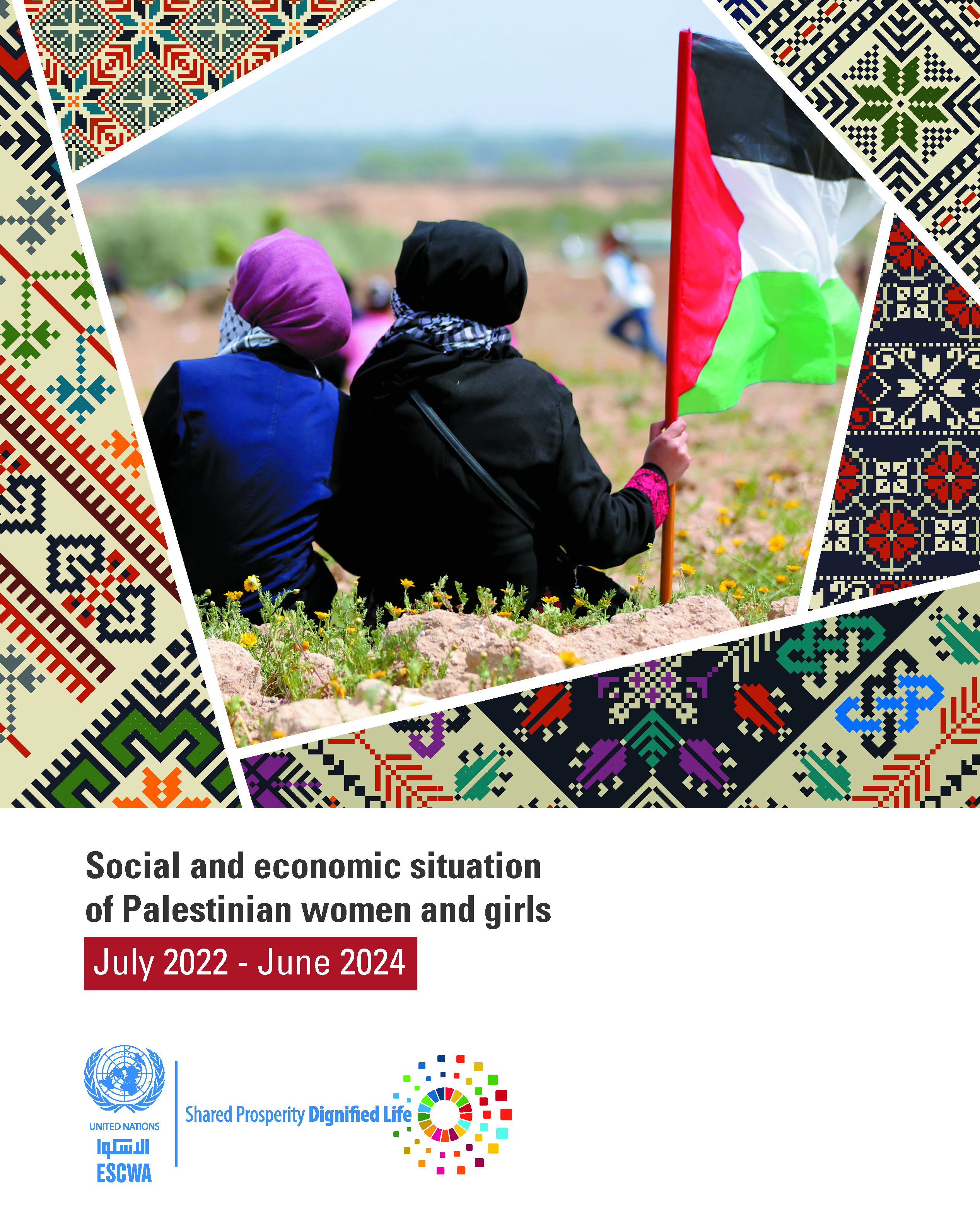
Social and Economic Situation of Palestinian Women and Girls: July 2022–June 2024
More LessThe report reviews the situation of Palestinian women and girls in the Occupied Palestinian Territory from 1 July 2022 to 30 June 2024, focusing on their political, social, economic and human rights. The security and political context are assessed, which deteriorated at an alarming rate during the reporting period, with devastating consequences for women’s rights to life, security and protection. The report describes the unprecedented Israeli war on Gaza since 7 October 2023, which has resulted in an escalation of humanitarian and protection crises, with further ramifications for the West Bank, including far-reaching impacts on women and girls. The analysis also focuses on life under occupation in the West Bank, emphasizing the severe consequences for women and girls of movement restrictions, increased arrests and raids. Positive achievements in the advancement of the rights of Palestinian women and girls during the reporting period are also highlighted. Lastly, recommendations are proposed for decision makers, encompassing a broad range of gender-sensitive legal and institutional reforms along with economic and social policy reforms targeting Palestinian women and girls. The report calls for urgent action for a permanent ceasefire and an end to the occupation in line with international law.
-
-
-

Social Cohesion: Concept and Measurement
More LessThis publication identifies definitions and conceptualisations of social cohesion, specifically for the purposes of national statistical offices, and covers ongoing debates concerning defining social cohesion, the breadth of the concept, and its multi-dimensional nature. The publication concludes that national statistical offices can benefit from approaches that satisfy their specific context and should avoid an overly encompassing definition of social cohesion that can undermine its analytical value. The publication also provides several implications for the operationalisation of the concept by national statistical organisations and outlines a number of methodological priorities of interest.
-
-
-
Social Development Report 1
More LessFive years after the popular uprisings that swept the Arab region, this report analyses the consequences of the Arab Spring, by focusing on three cases studies, namely Tunisia, Egypt and Morocco. It sheds light on the constitutional and political processes in these countries and examines the different new laws and legislations that have been enacted, as well as the socio - economic programmes that have been initiated to support the achievement of social justice. Findings reveal positive developments in terms of adopting a participatory approach in the drafting of the Constitutions and in integrating provisions in the new Constitutions on the promotion of social justice.
-
-
-
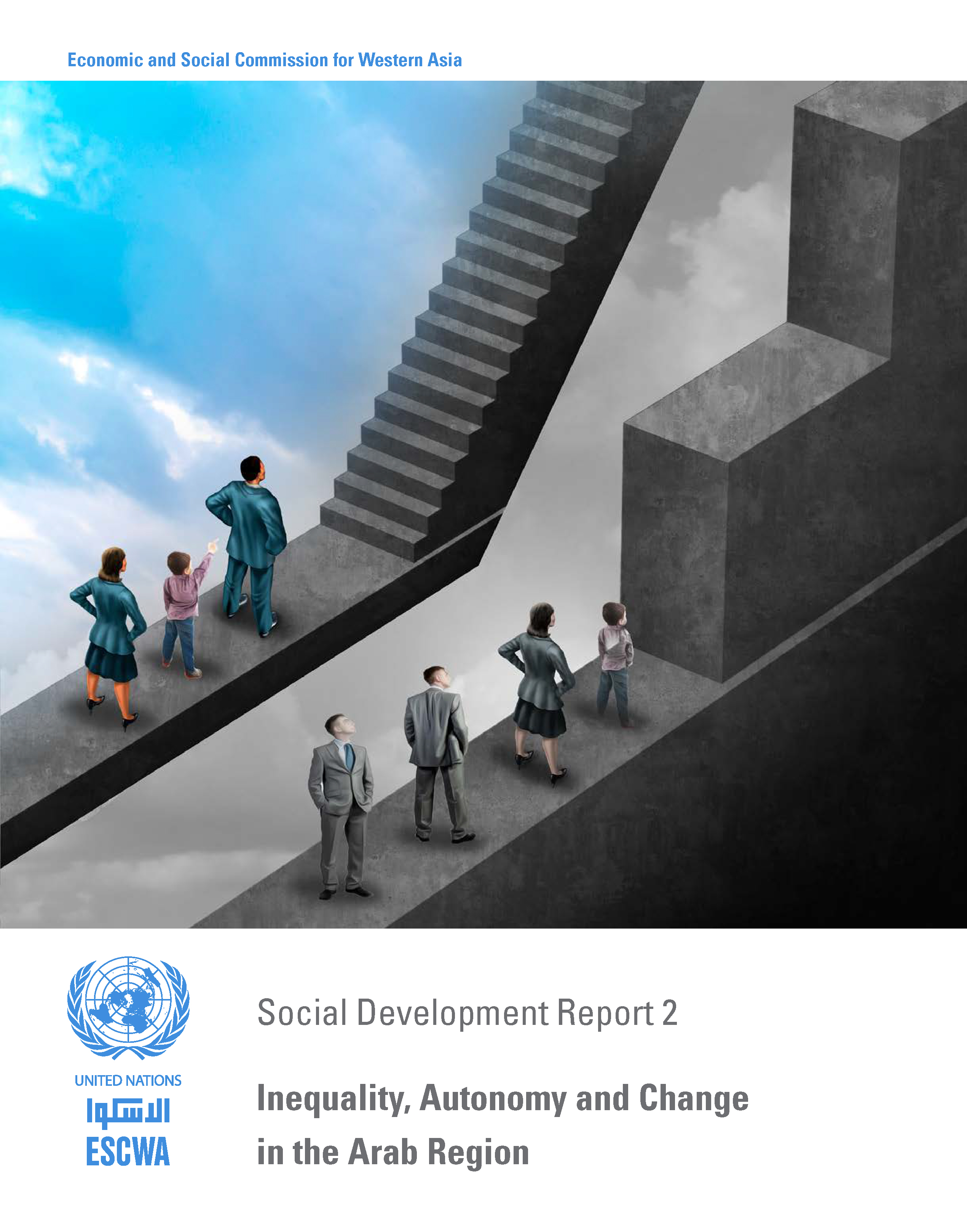
Social Development Report 2
More LessThis report examines how inequality and personal autonomy are likely to impact on the broad “political settlement “in the Arab region overtime. Chapter one provides a historical overview of the political economy of the region. Chapter two focuses on equality of opportunity at the macro-level in relation to access to income, education and employment. Chapter three moves to the micro level by focusing on personal autonomy. It defines and measures autonomy in the Arab world, and compares it to values held in the rest of the world, and among different countries and socio-economic groups. It additionally demonstrates the existence of a perceived autonomy gap in the Arab region and investigates its distribution among countries and groups; and analyzes the reasons behind this gap. It finally, examines the implications of this gap to the attitude towards various forms of inequality in the region.
-
-
-

Social Development Report 3
More LessUnprecedented social progress has been recorded around the world in the past few decades, with significant drops in poverty levels. However, this progress has been uneven as social and economic inequalities persist, or are increasing, in many countries. Marginalized groups still face numerous obstacles that prevent their full and real participation in economic, social, cultural and political life. To assess the situation on the ground in the Arab region, the present report provides three case studies from Egypt (residents of cemeteries in Cairo), Tunisia (residents of Kasserine, Kairouan and Sidi Bouzid in the Midwest region) and Lebanon (residents of the Bab al-Tabbaneh in Tripoli). These areas have endured chronic marginalization, and their inhabitants suffer from extreme exclusion, with Government and local authorities ignoring their development needs. The report is based on the principle of “leaving no one behind”, which underpins the 2030 Agenda for Sustainable Development. The international community pledged to achieve prosperity for all, especially the poorest and most marginalized groups. The report also builds on the framework proposed by the United Nations Development Programme to help achieve the 2030 Agenda, entitled “What does it mean to leave no one behind?”. The report also makes policy recommendations to address the exclusion of marginalized social groups, calls for a holistic approach to social policymaking and institutional reform to eradicate discrimination and exclusion, and presents targeted measures to address the fundamental obstacles that prevent the advancement of disadvantaged, marginalized or excluded social groups.
-
-
-
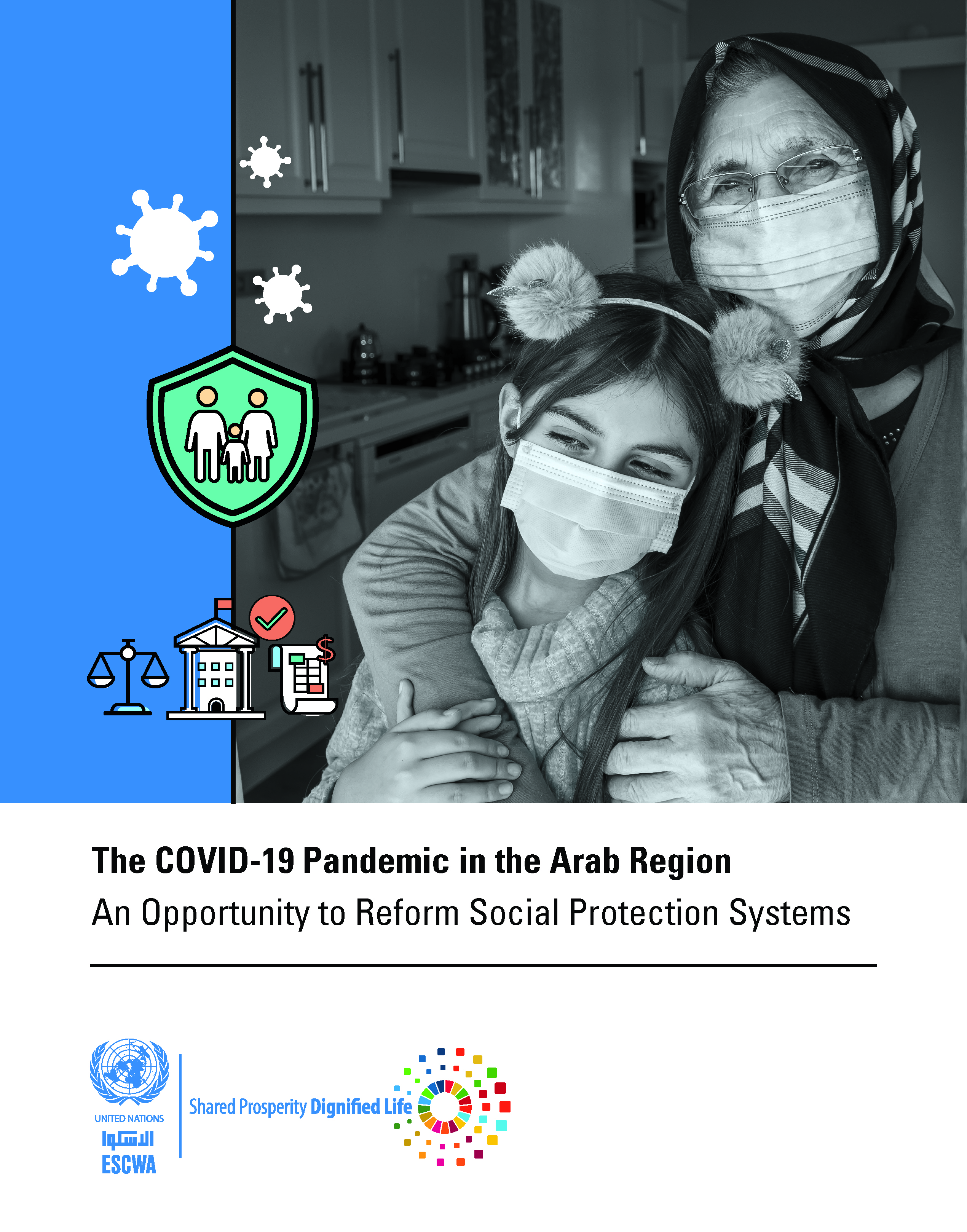
Social Development Report 4
More LessPrior to the COVID-19 pandemic, social protection systems in the Arab region were weak, fragmented, not inclusive, and non-transparent. They were also costly and unsustainable. Underinvestment in these systems and exclusion of vulnerable populations were key challenges. The COVID-19 crisis spotlighted the problems and presented a historic opportunity to address some of the challenges facing social protection systems. Lessons learned in various countries were identified as useful examples for change, in addition to certain innovations. This report embarked on actionable policy research to examine and assess the interplay of the social policy dimensions, global experiences, and regional responses to the pandemic in the Arab region. By critically engaging with the actions and priorities of a variety of stakeholders, the report develops and advocates for policies for the judicious and methodical implementation of the Sustainable Development Goals, combating inequality and supporting the principle of leaving no one behind, as instigated in the Agenda 2030.
-
-
-

Social Development Report 5
More LessThis Social Development Report, the fifth in this series, provides deep analysis of the status of marginalized and excluded population groups facing severe vulnerabilities in the Arab region. This report examines the region’s ability to meet its 2030 Agenda for Sustainable Development promise of leaving no one behind. Using the Sustainable Development Goal framework, the report reveals startling realities, with approximately 187 million individuals in the region being left behind across critical dimensions including social protection and access to health, education and housing services. Through intersectional analysis, the report examines the root causes of inequality and showcases pioneering initiatives addressing these challenges. The report presents actionable policy recommendations to empower marginalized groups and ensure more inclusion and equity towards achieving the Sustainable Development Goals. The report also highlights the urgency of integrating the leave no one behind framework into national strategies and calls for the reinvigoration of data collection and monitoring.
-
-
-
Social Infrastructure for Health
More LessThis report follows the first report produced under the Development Account project on: “Strengthening consumer protection in the provision of health services (including e-health) in the wake of the COVID-19 pandemic” (2020) The report explores the scope for both operational and conceptual exchange, examining the potential for applying consumer protection principles to emerging developments such as eHealth and the concomitant concerns such as financial risk, digital exclusion, privacy and inclusion within health and other social protection services. The COVID-19 pandemic provided the spur and the context for this report which looks towards the evolution of post-COVID social protection, while seeking to improve it. Considering the scope of the technical cooperation project (Social Protection), in close cooperation with UN-ESCWA colleagues, UNCTAD focused on the recommendations of the initial report most relevant to build a ‘Social Infrastructure for Health’ (related to comprehensive protection in health; financing & affordability issues; eHealth, including identity & eligibility; and integration of informal sectors), therefore seeking a stronger connection to the core topic of the project.
-
-
-
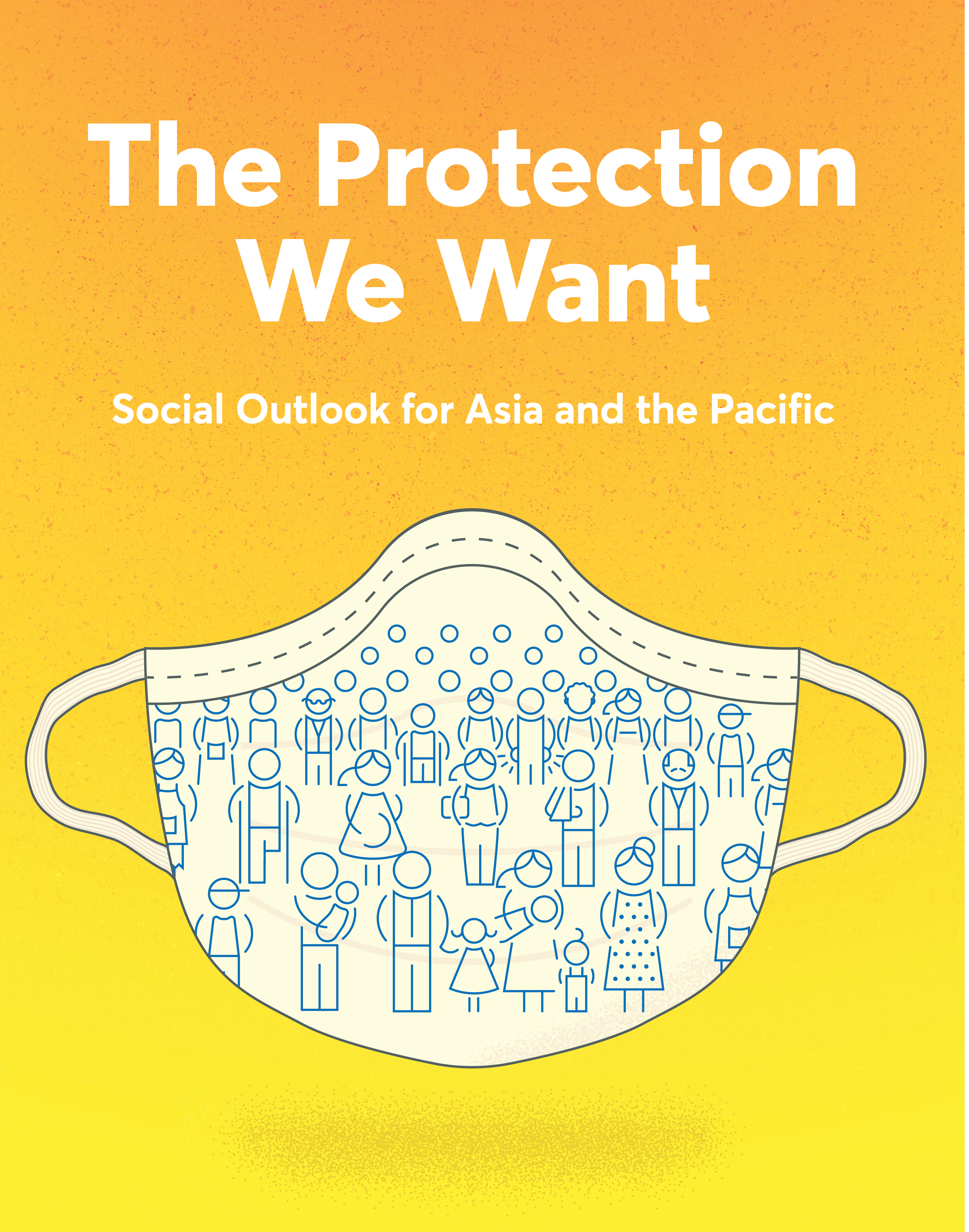
Social Outlook for Asia and the Pacific 2021
More LessSocial protection is a fundamental right and serves as an enabler for achieving the 2030 Agenda for Sustainable Development. Social protection has been identified as one of the key enablers for implementing the 2030 Agenda and achieving the Sustainable Development Goals (SDGs). In most countries, however, large population groups remain unprotected from normal life contingencies. Meanwhile, unprecedented demographic transformations are underway, and the changing world of work introduces new risks for the majority of workers currently occupying jobs in the informal sector. This publication provides the evidence and impetus to progressively realize social protection for all over the next decade (Decade for Action), based on country-specific contexts, opportunities and challenges.
-
-
-
Social Outlook for Asia and the Pacific 2022
More LessThe Social Outlook is a flagship ESCAP publication produced every two years with a dedicated focus on social development issues in Asia and the Pacific. In 2022, under the theme of “The Workforce We Need”, the Social Outlook focuses on building a healthy, protected and productive workforce in Asia and the Pacific to achieve inclusive and sustainable development and build back better after COVID-19 pandemic, particularly in the presence of four key megatrends including climate change, ageing, digitalization and rising inequalities which has already prompted green, demographic and digital transitions that are altering the future world of work. Through its analysis, the Social Outlook aims to strengthen the evidence base and build capacity of policymakers on how to design and expand social protection, active labour market policies and health systems to achieve a resilient workforce today and in the future. The Report is structured along six chapters. Chapter 1 sets the latest social development context in the region highlighting the need for deepening solidarity and rebuilding trust to implement the 2030 Agenda on Sustainable Development. Next, Chapters 2-4 delve into three components of a resilient workforce, namely a healthy, productive, and protected workforce and emphasize the role of such a workforce in inclusive and sustainable development. Chapter 5 discusses policy recommendations for attaining such a workforce in Asia and the Pacific and proposes the renewal of the social contract which can put the region on a path for breakthrough and prosperity. Chapter 6 concludes.
-
-
-
Social Outlook for Asia and the Pacific 2024
More LessThe Social Outlook is a flagship ESCAP publication produced every two years with a dedicated focus on social development issues in Asia and the Pacific. In 2024, the Social Outlook focuses on future proofing social protection in Asia and the Pacific in the presence of three global megatrends, namely climate change, demographic shifts including population ageing and the emergence of digital technologies. the analysis contained in the report aims to strengthen the evidence base and build capacity of policy makers on how to future proof and finance their respective social protection systems. The Report is structured around 5 chapters. Chapter 1 reviews poverty and inequality amidst complex crises in Asia and the Pacific. Chapter 2 assesses the status of social protection system while Chapter 3 explores how social protection systems need to adapt to global megatrends. Chapter 4 adopts a forward-looking methodology and develops four alternative future scenarios for social protection systems by 2040. Using strategic foresight tools, it provides policy recommendations at national and reginal levels to meet the preferred future consistent with inclusive and sustainable development. Chapter 5 estimates the cost of inaction and action and elaborates on sources of financing for long-term investments in social protection systems.
-
-
-
Social Panorama of Latin America 1997
More LessThe Social Panorama of Latin America provides an annual assessment of the most salient aspects of social development in Latin America, with particular emphasis on the question of equity. Among the issues it examines are poverty, education, the situation of children and young people, gender and social expenditure. It also presents an overview of how Governments are implementing their social agendas and reviews new policy directions in various social sectors. The main emphasis of the 1997 edition of the Panorama is on the structural aspects of income and employment distribution and the intergenerational transmission of educational and work opportunities. Legislative measures taken in the past few years are reviewed, as well as the steps that have been taken in the region to modernize State social institutions and the principal aspects of this new institutional structure. The Social Panorama of Latin America also presents a summary of the first Regional Conference in Follow-up to the World Summit for Social Development, held in Sao Paulo in April 1997.
-
-
-
Social Panorama of Latin America 2020
More LessThis publication examines the social impact of an unprecedented crisis. The effects of the COVID-19 pandemic have spread to all areas of human life, altering the way we interact, crippling economies and bringing about profound changes in societies. The pandemic has highlighted and exacerbated the major structural gaps in the region, and it is clear that the costs of inequality have become unsustainable and that it is necessary to rebuild with equality and sustainability, aiming for the creation of a true welfare state, long overdue in the region.
-
-
-
Social Panorama of Latin America 2021
More LessThe 2021 edition of the Social Panorama of Latin America examines the social impact of the crisis prompted by the COVID-19 pandemic and provides the most recent statistics on poverty, inequality and social spending in the region. The study also analyzes the prolonged health crisis’s profound effects on health care and social protection systems, along with the labor impacts caused by the pandemic, and it includes a chapter on the importance of moving towards a care society as the beacon for a sustainable recovery with gender equality.
-
-
-
Social Panorama of Latin America and the Caribbean 2022
More LessThis publication presents the relevant macroeconomic background in terms of the evolution of per capita GDP, employment, household income distribution and the consumer price index, and looks at how income inequality and poverty have changed over the past two decades. It discusses changes that occurred in social stratification during the COVID-19 pandemic and addresses the worrying silent crisis of education as another of the pandemic’s major consequences including access to quality alternatives for continuing education and the availability of resources for remote learning. The publication delves upon access to education and the unequal labour impacts of the pandemic on men and women. It also analyses the social institutional framework and the evolution of social spending in Latin America and the Caribbean.
-
-
-
Social Panorama of Latin America and the Caribbean 2023
More LessThis edition of the Social Panorama of Latin America and the Caribbean addresses the challenges of labour inclusion as a key axis for inclusive social development. Despite a recovery in social indicators in 2022 (reduction of poverty and inequality, recovery of employment), the region faces a double trap of low growth and high levels of poverty and inequality. Labour inclusion is key to combating poverty, reducing informality and inequality and moving towards inclusive social development. Gender gaps in labour market inclusion are driven by the unequal distribution of the burden of care work, which is largely borne by women. In the case of migrants, overqualification and discrimination also affect their labour market inclusion. The efforts made by countries in terms of investment in labour policies, which on average amount to 0.34% of GDP, are insufficient. What is needed is a shift from labour market integration to labour market inclusion, guaranteeing access to quality employment, income above the minimum wage and access to social protection, particularly for women and young people.
-
-
-
Social Panorama of Latin America and the Caribbean 2024
More LessThis edition of the Social Panorama of Latin America and the Caribbean, 2024 addresses the challenges of non-contributory social protection to advance towards inclusive social development in the region. Addressing the development crisis, the gaps in inclusive social development and the reconfiguring risk structure requires progress towards universal, comprehensive, sustainable and resilient social protection systems. Non-contributory social protection policies are essential in achieving the objectives and functions of social protection systems: income protection, access to social services and labour inclusion. One in three households in the lowest income quintile lacks access to social protection and programme amounts are often insufficient to overcome poverty. The region faces persistent gender inequality and a care crisis that will be exacerbated by accelerated ageing. Progress in poverty eradication requires comprehensive policies, as well as progress in establishing a standard of social investment in non-contributory social protection.
-