World Survey of the Role of Women in Development
Filter :
Sustainable Development Goals
Subject
Publication date
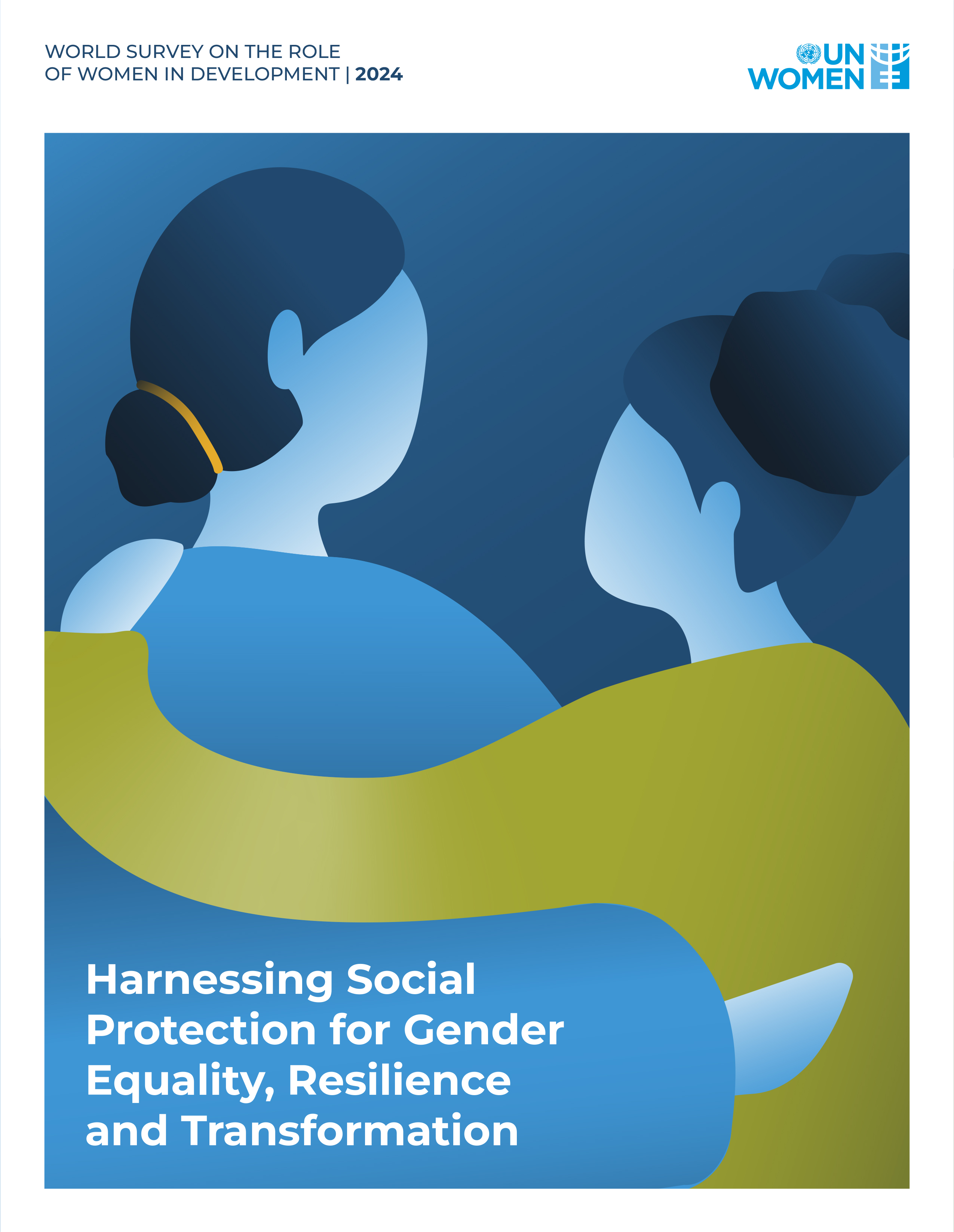
World Survey on the Role of Women in Development 2024
Harnessing Social Protection for Gender Equality, Resilience and Transformation
The World Survey on the Role of Women in Development is presented every five years to the Economic and Financial Committee of the United Nations General Assembly. It provides a unique opportunity to put gender equality issues on the economic policy agenda and bring together perspectives on human rights and sustainable development. This ninth edition takes stock of progress, gaps and challenges in building comprehensive, gender-responsive social protection systems. It provides examples and recommendations on how these systems can better protect women and girls from poverty and deprivation, strengthen their resilience to shocks, and transform social norms, structures and institutions that keep them from realizing their full potential. To produce the report, UN-Women brought together researchers, policymakers, civil society actors and United Nations system partners. The report draws on their collective expertise to provide guidance to policymakers and support advocacy for a new generation of gender-responsive social protection systems equipped to uphold rights and advance sustainable development.
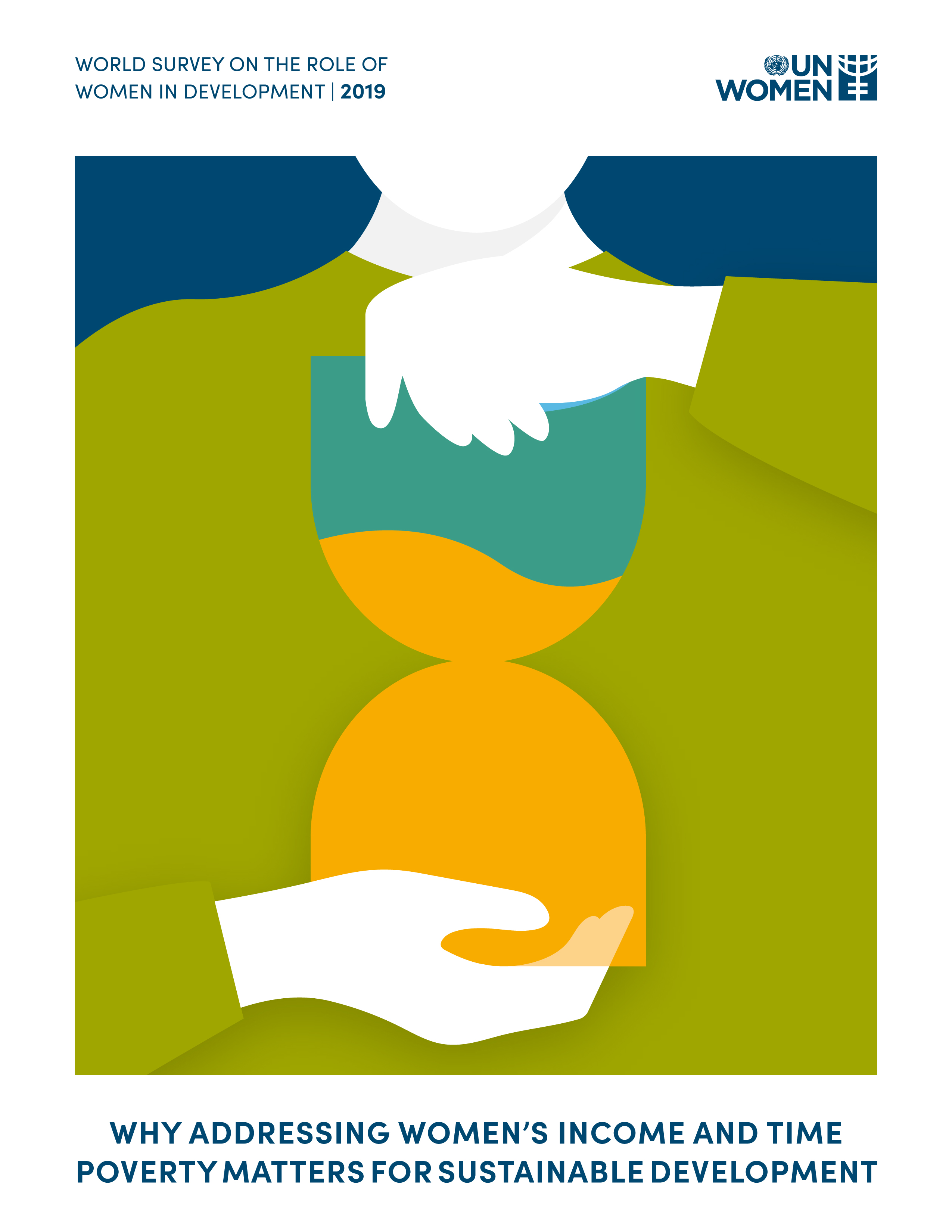
World Survey on the Role of Women in Development 2019
Why Addressing Women’s Income and Time Poverty Matters for Sustainable Development
This publication focuses on the ways in which the nexus of time and income poverty shapes or constraints the lives of women. It argues that addressing this double bind is critical to achieving sustainable development, particularly in low-income contexts, and presents an integrated policy agenda for doing so. The report finds large gender gaps in extreme poverty rates, especially between the ages of 25 and 34, coinciding with the phase of life oriented around family formation and child-rearing. During this phase, women and their households face increased expenses associated with having children, while also experiencing constraints on the time they have available for engaging in paid work. To address this double bind, public action must be geared towards supporting women at critical stages of their life course in an integrated manner through a combination of gender-responsive social protection and labour market interventions, as well as investments in time-saving public services (e.g. childcare, transport) and basic infrastructure.
World Survey on the Role of Women in Development 2014
Gender Equality and Sustainable Development
World Survey on the Role of Women in Development 2009
Women's Control over Economic Resources and Access to Financial Resources, Including Microfinance
World Survey on the Role of Women in Development 2004
Women and International Migration
A gender perspective is essential to understanding both the causes and consequences of international migration. Female migrants are increasingly part of worker flows, moving on their own to become the principal wage earners for their families. Most women move voluntarily, but women and girls are also part of the flows of forced migrants who have fled conflict, persecution, environmental degradation, natural disasters and other situations that affect their habitat, livelihood and security. The trafficking of people for prostitution and forced labour also, is an area of increasing concern to the international community. This Survey sets out recommendations that, if adopted, will improve the situation of migrant, refugee and trafficked women.