


World AIDS Day Report
The World AIDS Day Report series is published by the Joint United Nations Programme on HIV and AIDS (UNAIDS) in Geneva. It focuses on the issues related to the AIDS epidemic and looks in-depth at problems faced with ending HIV/AIDS altogether. Facing an infectious virus, failure to make progress for key populations undermines the entire AIDS response and helps explain slowing progress. Strengthening international cooperation and solidarity is key, because we can only end AIDS by ending AIDS everywhere.
Filter :
Sustainable Development Goals
Subject
Publication date
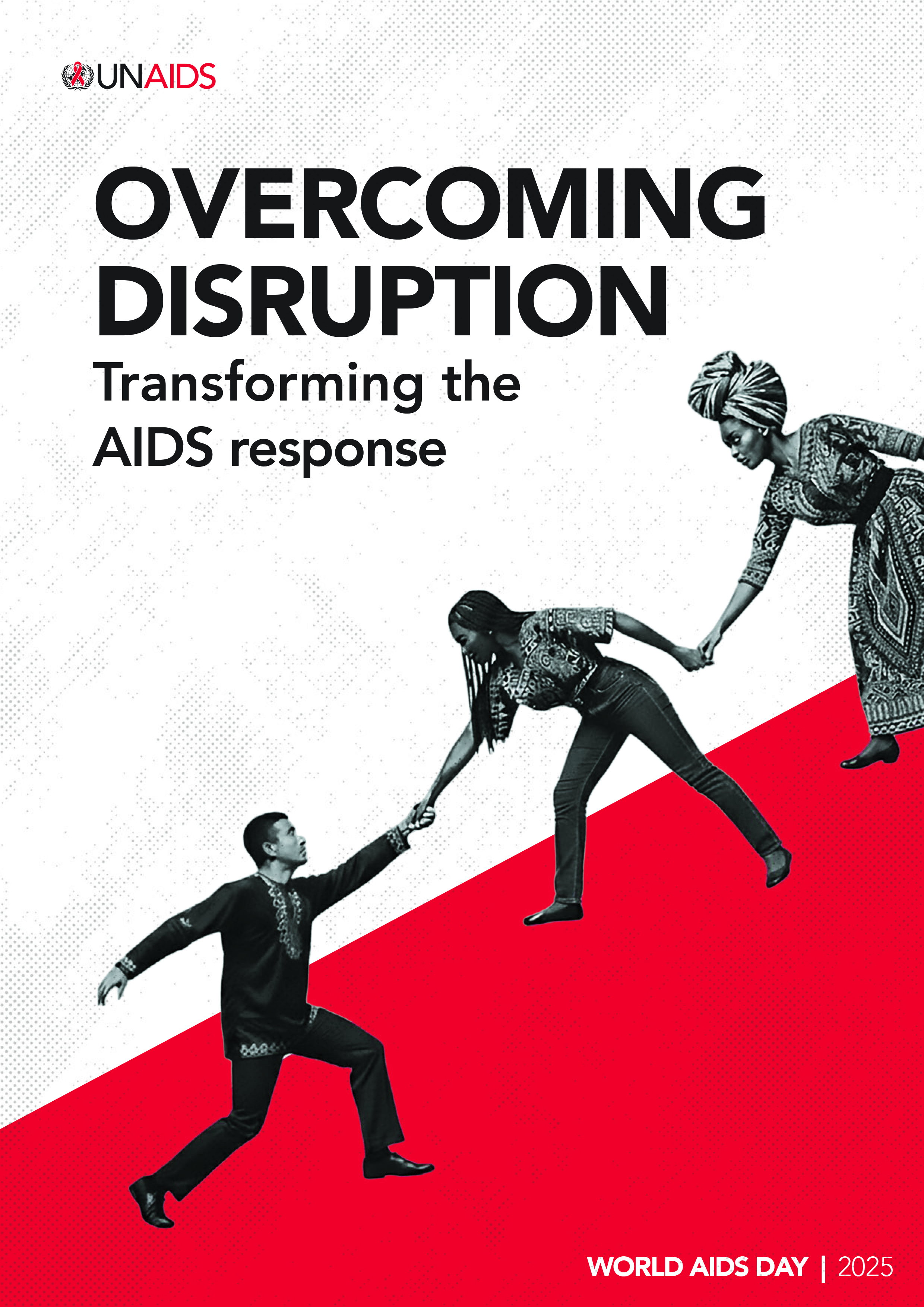
World AIDS Day Report 2025
Overcoming Disruption: Transforming the AIDS Response
The 2025 funding crisis has thrown the AIDS response into turmoil with massive disruptions to HIV prevention and community led services, particularly for the most vulnerable. Community-led services, vital to reaching marginalized populations, are being deprioritized while the rise in punitive laws criminalizing same-sex relationships, gender identity, and drug use is amplifying the crisis, making HIV services inaccessible. However, the new report by UNAIDS shows evidence that resilience, investment and innovation combined with global solidarity still offer a path to end AIDS. Abrupt reductions in international HIV assistance in 2025 have deepened existing funding shortfalls. The OECD estimates that external health assistance is projected to drop by 30–40% in 2025 compared with 2023, causing immediate and even more severe disruption to health services in low- and middle-income countries. Prevention services—already under strain before the crisis—have been hit hardest. Major reductions in access medicines to prevent HIV (pre-exposure prophylaxis referred to as PrEP) and sharp declines in voluntary medical male circumcision for HIV prevention have left a growing protection gap for millions. The dismantling of HIV prevention programmes designed with and for young women have deprived adolescent girls and young women of HIV prevention, mental health, and gender-based violence services in many countries. This increases their vulnerability further—already in 2024 there were globally 570 new HIV infections every day among young women and girls aged 15—24. Community-led organizations—the backbone of the HIV response and who were able to reach people most vulnerable to HIV—report widespread closures, with more than 60% of women-led organizations suspending essential programmes. Services for key populations including men who have sex with men, sex workers, people who inject drugs and transgender people have also been severely impacted. A failure to reach the 2030 global HIV targets of the next Global AIDS Strategy could result in an additional 3.3 million new HIV infections between 2025 and 2030.

World AIDS Day Report 2024
Take the Rights Path to End AIDS
The world’s decades-long response to HIV is at an inflection point. The 2024 UNAIDS global report, The Urgency of Now, demonstrated that the world now has the means to end AIDS as a public health threat by 2030. Midway to the 2025 milestone set in June 2021, the global HIV response has moved closer to the goal of ending AIDS as a public health threat by 2030, a commitment enshrined in the Sustainable Development Goals (SDGs). Fewer people acquired HIV in 2023 than at any point since the late 1980s. Despite successes, the world is not on track to end AIDS by 2030. At this historic crossroads, the path the world takes—towards ending AIDS, or towards a future of needless illness, death and unending costs—depends on political will. How to end AIDS as a public health threat is not in doubt. This report focuses on the essentials—the central role of human rights as it relates to ensuring access to HIV prevention and treatment services and addressing the structural determinants that increase vulnerability to HIV. An approach grounded in human rights is vital for the collective HIV response to be robust, person-centred and sustainable. HIV services will reach people in need only if their human rights are upheld; if discriminatory and harmful laws are removed; and if stigma, discrimination and violence are effectively tackled.
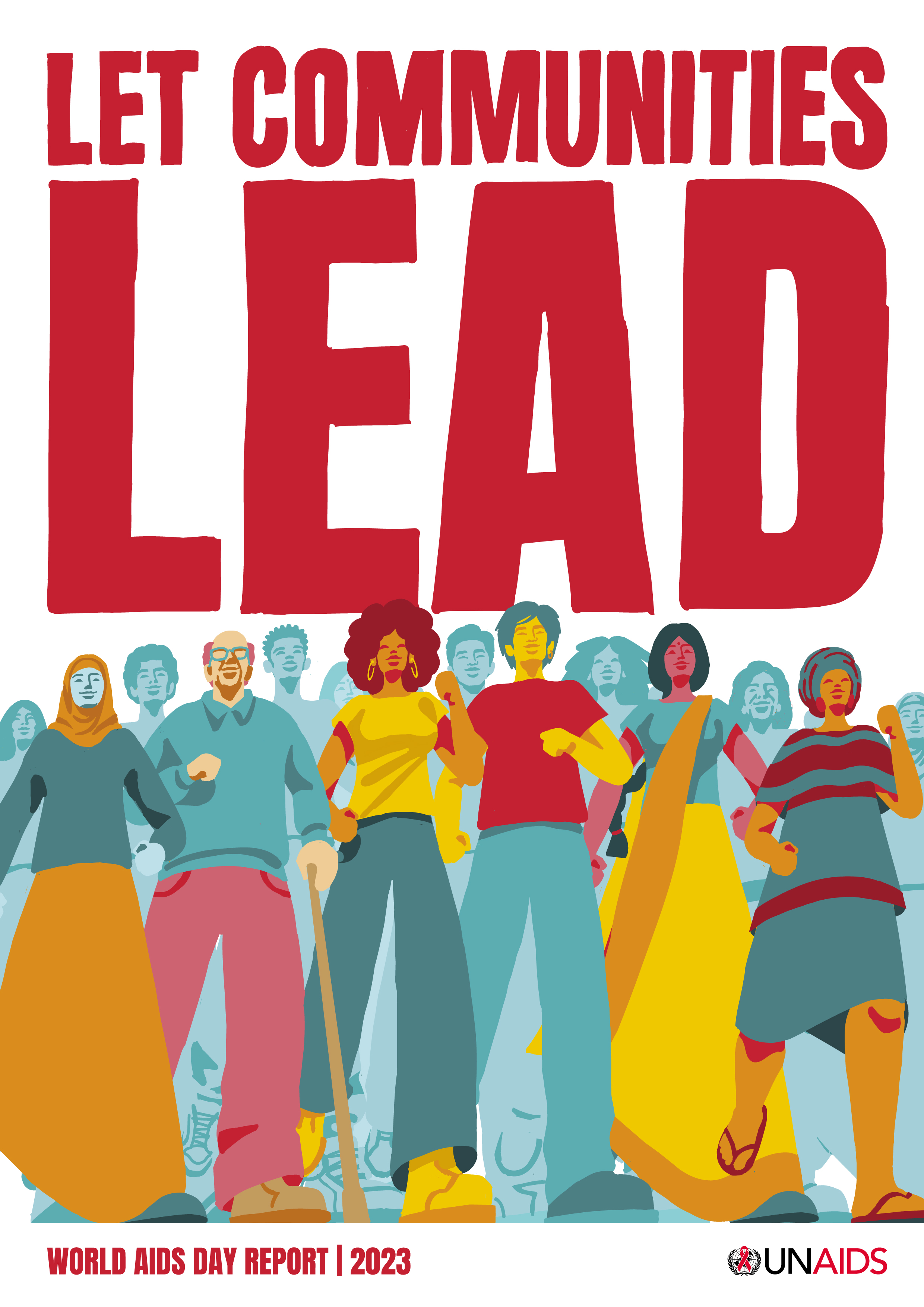
World AIDS Day Report 2023
Let Communities Lead
This report shows how community-led interventions are central to achieving the end of AIDS and to sustaining the gains into the future. People living with or affected by HIV have driven progress in the HIV response—reaching people who have not been reached; connecting people with the services they need; pioneering innovations; holding providers, governments, international organizations and donors to account; and spearheading inspirational movements for health, dignity and human rights for all. They are the trusted voices. Communities understand what is most needed, what works, and what needs to change. Communities have not waited to be handed their leadership roles — they have taken the roles on themselves and held fast in their insistence on doing so. They have applied their skills and determination to help tackle other pandemics and health crises too, including COVID-19, Ebola and mpox. Letting communities lead builds healthier and stronger societies. This report shines a light on the underreported story of the everyday heroes of the HIV response. But it is much more than a celebration of the achievements of communities. It is an urgent call to action for governments and international partners to enable and support communities in their leadership roles.
World AIDS Day Report 2022
Dangerous Inequalities
The World AIDS Day (WAD) report is one of two annual UNAIDS flagship reports. The report is planned to be launched on 29 November 2022, ahead of 1 December, the international day dedicated to raising awareness of the HIV epidemic and remembering those who have died of AIDS-related causes. The WAD Report for 2022 will build upon the 2022 World AIDS Day theme “Equalize” by sharing new analyses of UNAIDS data that underscore where the inequality gaps are, why they are so crucial, and the practical steps that can be taken to close those gaps.

World AIDS Day Report 2021
Unequal, Unprepared, Under Threat - Why Bold Action Against Inequalities Is Needed to End AIDS, Stop COVID-19 and Prepare for Future Pandemics
Every year on the occasion of World AIDS Day, 1 December, the Joint UN Programme on HIV/AIDS (UNAIDS) releases a report on pressing issues facing the global response to the AIDS pandemic. As the AIDS and COVID-19 pandemics collide, the 2021 World AIDS Day report warns that the colossal new challenges created by COVID-19 threaten the gains made against AIDS thus far. Entrenched inequalities stand in the way of further progress against AIDS and leave the world vulnerable to COVID-19 and future pandemics. The damage done by COVID-19 to HIV programmes varies across countries. There have been substantial setbacks, particularly during the first six months of the crisis. People living with HIV are also at elevated risk of COVID-19-related morbidity and mortality. In many places, the upheaval caused by COVID-19 has summoned the inventiveness and resilience that have become hallmarks of the HIV response. HIV programmes that are well-resourced, willing to adapt and anchored in strong community involvement have tended to cope the best. The Global AIDS Strategy 2021–2026 and the UN General Assembly’s 2021 Political Declaration on Ending AIDS call on countries to address inequalities and close gaps. With no time to spare, those agreed actions are not being made at the required speed and scale. What is at stake is bigger than AIDS. During negotiations on a global framework for pandemic prevention, preparedness and response, the hard-won successes and bitter failures from the response to AIDS have experiences to share. Those lessons must be quickly learned and applied to end AIDS within the next decade, to swiftly defeat COVID-19 and to proactively confront the pandemics of tomorrow.
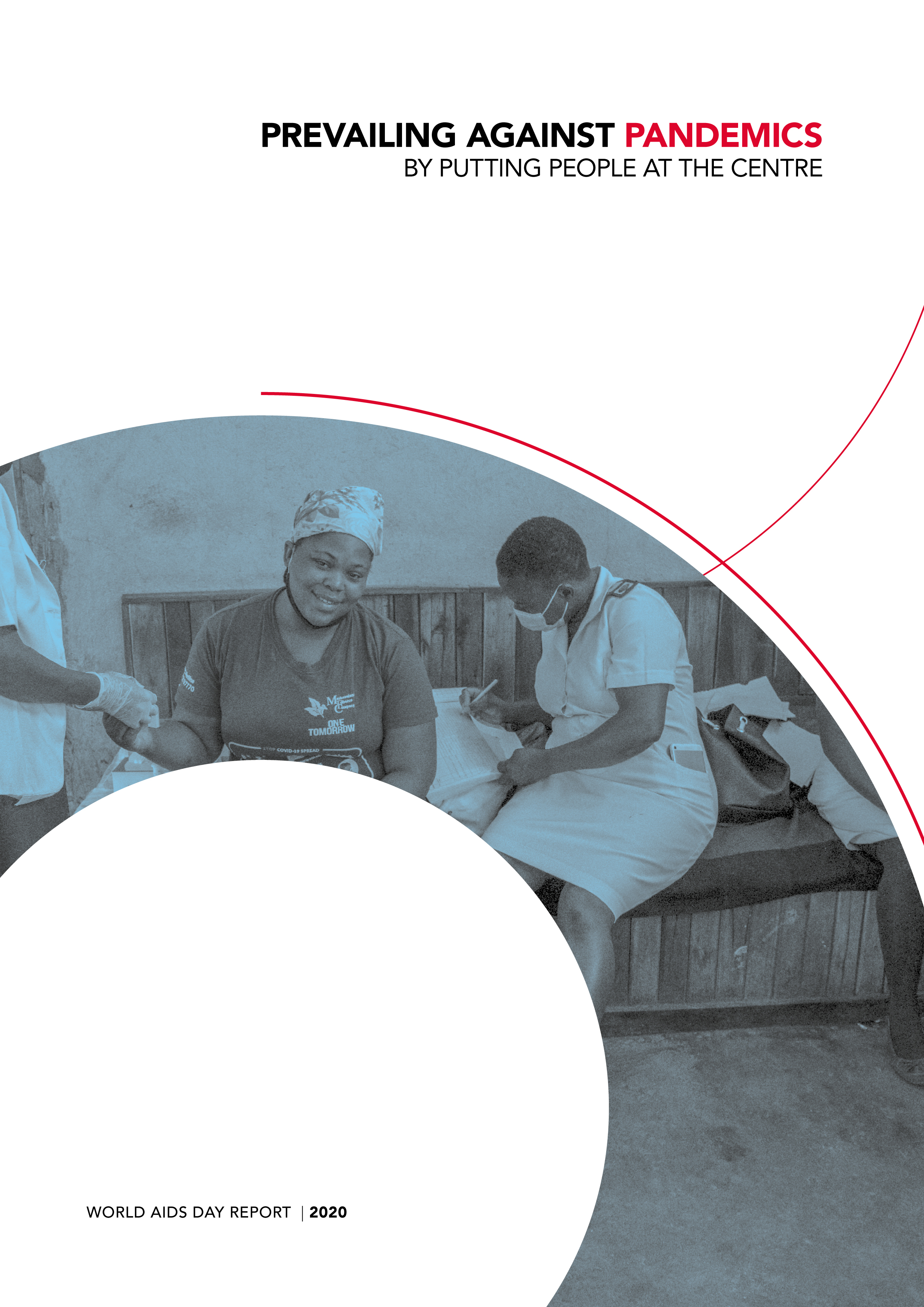
World AIDS Day Report 2020
Prevailing Against Pandemics by Putting People at the Centre
As this report shows, the global HIV response was off track even before the COVID-19 (coronavirus) pandemic, but the collision of COVID-19 and HIV has sent it back further. The Fast-Track Targets, which expire at the end 2020, will not be achieved. some 38 million people are living with HIV, with more than 12 million people waiting for life-saving HIV treatment. In 2019, 1.7 million people were newly infected with HIV and 690,000 people died from AIDS-related illnesses. Investments in HIV and the lessons from how communities have responded to HIV have strengthened the fight against COVID-19. HIV activists and communities mobilized to defend the gains in the AIDS response, to protect people living with HIV and other vulnerable groups and to push the coronavirus back.

World AIDS Day Report 2019
Power to the People
This report argues that power in fact rests in the hands of the people, as can be seen in countless local, national and international movements to redistribute power and bring greater attention to neglected issues. Mass movements to redistribute power often have humble beginnings, born out of desperate need or simmering injustice—sparks of frustration that ignite infernos of change. In the early days of the HIV response, grossly insufficient leadership and medical care ignited a global civil society movement. It was the loud and persistent voice of people living with HIV and key populations at high risk of infection that accelerated the pace of research on antiretroviral medicines and drove down their prices, and it is that same determination that continues to expand the provision of affordable, life-saving treatment to millions of people around the world living with HIV.