


World Programme for Human Rights Education
On 10 December 2004, the General Assembly of the United Nations proclaimed the World Programme for Human Rights Education (2005-ongoing) to advance the implementation of human rights education programmes. The World Programme was established by the General Assembly’s resolution 59/113 (10 December 2004). Building on the achievements of the United Nations Decade for Human Rights Education (1995-2004), the World Programme seeks to promote a common understanding of basic principles and methodologies of human rights education, to provide a concrete framework for action and to strengthen partnerships and cooperation from the international level down to the grass roots. Unlike the specific time frame of the Decade, the World Programme is structured in consecutive phases, to further focus national human rights education efforts on specific issues.
Filter :
Sustainable Development Goals
Subject
Publication date
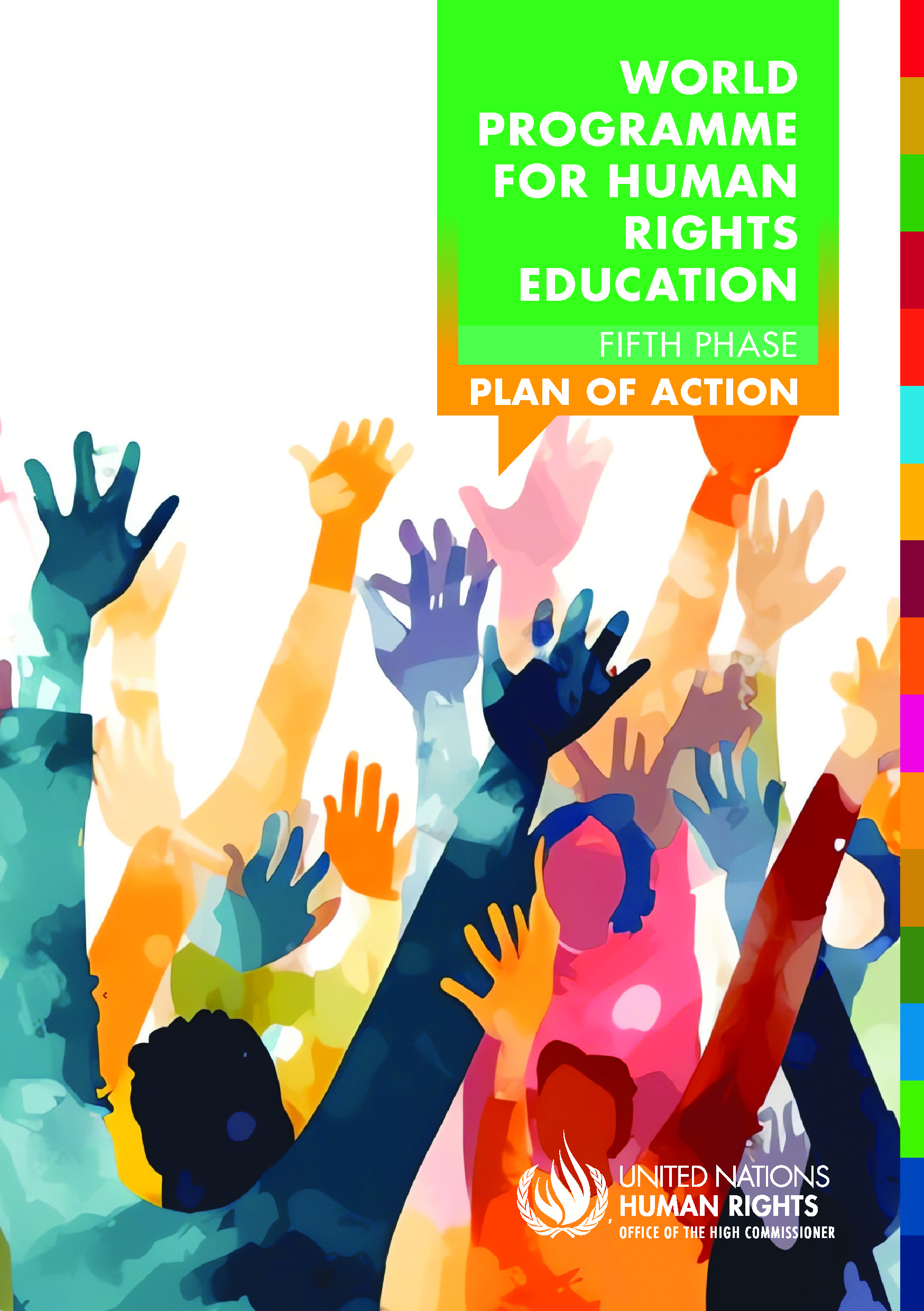
World Programme for Human Rights Education: Plan of Action, Fifth Phase
The World Programme for Human Rights Education was proclaimed by the United Nations General Assembly in December 2004 as an ongoing global initiative structured in consecutive phases in order to advance implementation of human rights education programmes in all sectors. Human rights education promotes a shared sense of humanity and fosters a common understanding that all human beings are equally deserving of dignity, respect and justice. It empowers children and youth to fulfil their role as global citizens, to take action and uphold their human rights and those of others, and to participate meaningfully in public affairs and democratic decision-making processes. In recognition of this, the United Nations Human Rights Council, through its resolution 57/10, launched the Fifth Phase (2025-2029) of the World Programme for Human Rights Education, dedicated to children and youth, with a focus on human rights education in three thematic areas: digital technologies and human rights, gender equality, and environment and climate change. Building on United Nations documents and consultations with a diverse range of stakeholders, this Fifth Phase publication outlines the scope, background, specific objectives and components of the plan of action and steps to implement it.
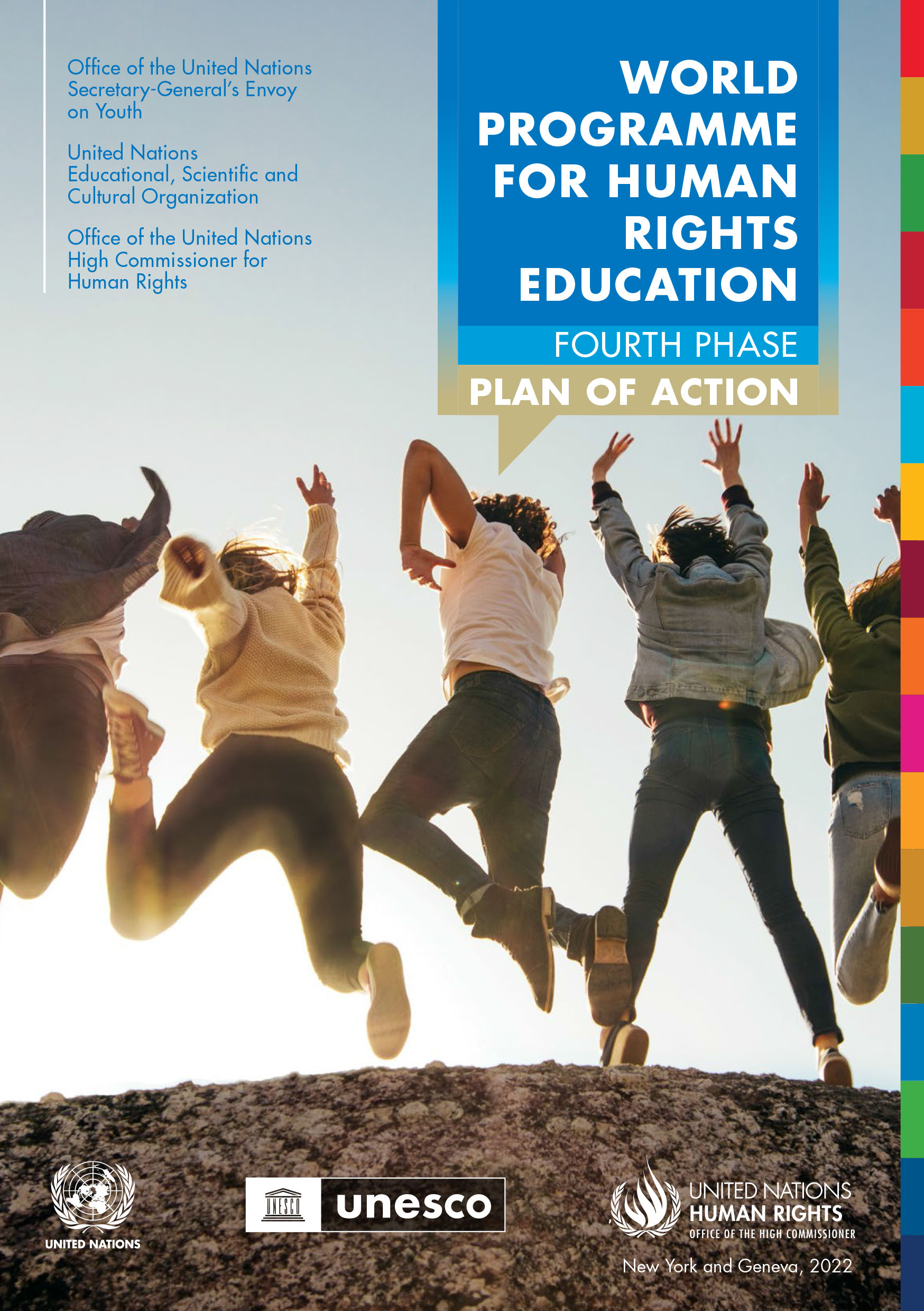
World Programme for Human Rights Education: Plan of Action, Fourth Phase
The Plan of Action provides methodological guidance to develop a comprehensive human rights education strategy for young people at the national level that supports youth empowerment, participation and inclusion. It addresses governments, national human rights institutions and civil society organizations, including youth movements and networks, as well as education practitioners. Member States adopted the Plan of Action to guide implementation of the fourth phase (2020-2024) of the World Programme for Human Rights Education (2005-ongoing), proclaimed by the General Assembly in 2004 and structured in consecutive phases, each focusing on a specific target sector or thematic area.
World Programme for Human Rights Education: Plan of Action, Third Phase
World Programme for Human Rights Education: Plan of Action, Second Phase
The Plan of Action provides methodological guidance to develop a comprehensive human rights education strategy for young people at the national level that supports youth empowerment, participation and inclusion. It addresses governments, national human rights institutions and civil society organizations, including youth movements and networks, as well as education practitioners. Member States adopted the Plan of Action to guide implementation of the second phase (2010-2014) of the World Programme for Human Rights Education (2005-ongoing), proclaimed by the General Assembly in 2004 and structured in consecutive phases, each focusing on a specific target sector or thematic area.
World Programme for Human Rights Education: Plan of Action, First Phase
The Plan of Action provides methodological guidance to develop a comprehensive human rights education strategy for young people at the national level that supports youth empowerment, participation and inclusion. It addresses governments, national human rights institutions and civil society organizations, including youth movements and networks, as well as education practitioners. Member States adopted the Plan of Action to guide implementation of the first phase (2005-2009) of the World Programme for Human Rights Education (2005-ongoing), proclaimed by the General Assembly in 2004 and structured in consecutive phases, each focusing on a specific target sector or thematic area.