


World Heritage Review - Volume 2021, Issue 97, 2021
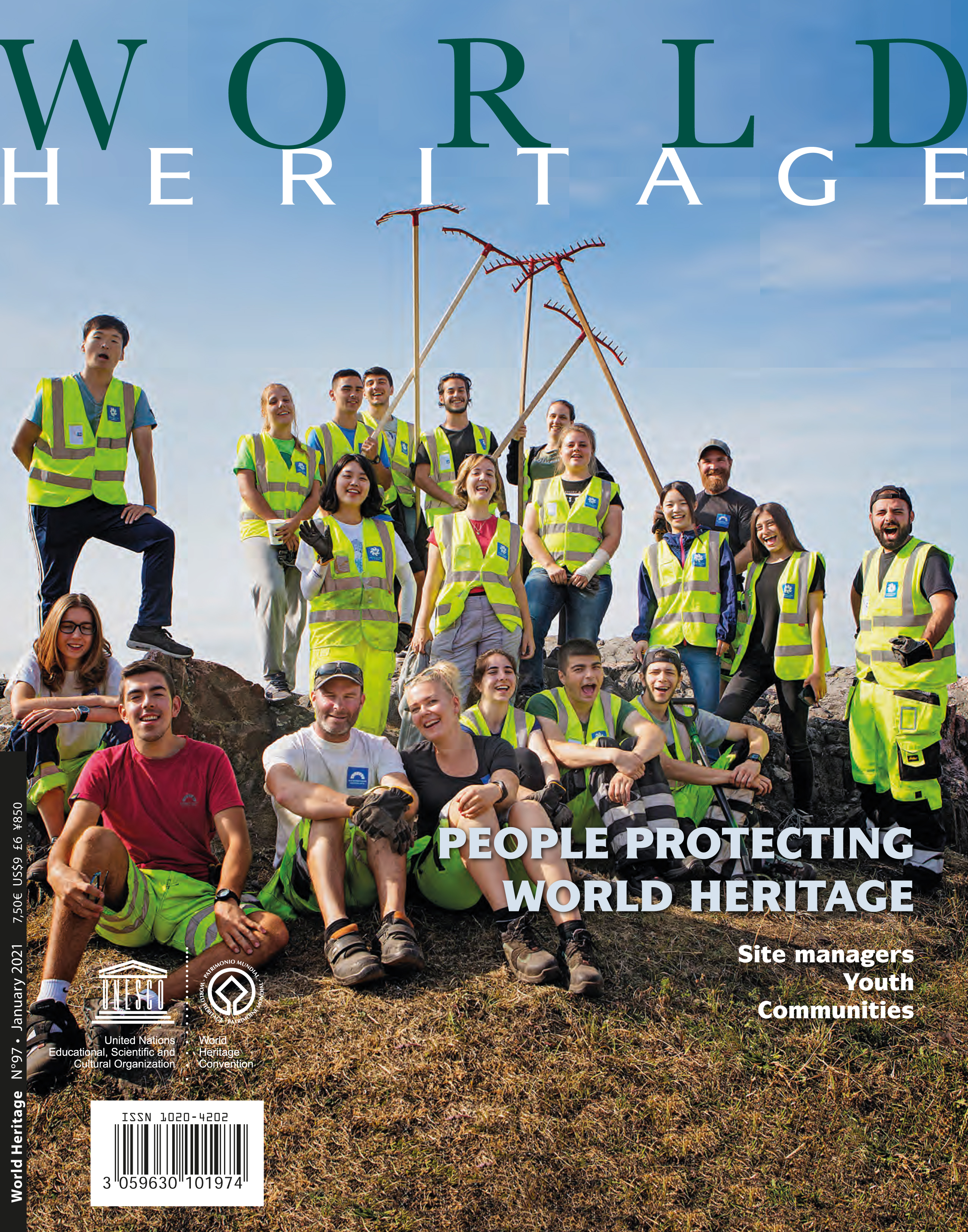
Volume 2021, Issue 97, 2021
-
-
In Focus: Youth and World Heritage
More LessAuthors: Inès Yousfi and Pravali VangetiIn 2019, there were about 1.2 billion young people – age 15 to 24 – in the world, making up nearly 16 per cent of the global population. UNESCO has long worked with the conviction that the voice of young people matters in shaping a better future, especially at a time when we have to rethink radically the way we deal with our multifaceted heritage and its challenges.
-
-
-
NGOs and activists
More Lessمؤلف: Andrey PetrovUntil the mid-1990s, not a single natural area in the Russian Federation was inscribed on the World Heritage List.
-
-
-
Communities
More Lessمؤلف: Dr. Chihei SuzukiUntil now, cultural heritage has belonged to a select few. The term ‘cultural heritage’ has been used to recognize the value of heritage that is ancient, monumental, or created by the powerful and wealthy, and whose stakeholders are limited in the main to owners, governments and learned experts.
-
-
-
Site managers
More Lessمؤلف: Jacqueline AndreIn 2015, Forest Officer Jacqueline Andre became head of the National Parks unit in the Forestry, Wildlife and Parks Division of the Commonwealth of Dominica, which includes responsibility for the Morne Trois Pitons National Park World Heritage site.
-
-
-
Close-Up: Byblos and COVID-19
More Lessمؤلف: Tania ZavenByblos in Lebanon is one of the oldest continuously inhabited cities in the world, founded some 8,900 years ago.
-
-
-
Advisory Bodies
More Lessمؤلف: Eugene JoPeople make heritage, value heritage and take care of heritage. As much as we put importance on creating heritage and identifying its significance, the stages which lead to the inscription of a site to the World Heritage List, the action of protecting and managing a heritage place is truly the focus and objective of the World Heritage Convention.
-
-
-
Conventions
More Lessمؤلف: Saori Matilda MachimuraArtists told me it was the end of hope. Before COVID-19, working as an artist was already challenging. But suddenly it was, “there is no hope”. I will never forget it.’ Juliana Akoryo, the Commissioner for Culture and Family Affairs in Uganda, is calling from her office in Kampala via Zoom, the video conference application. She is thinking back to the beginning of 2020, when the threat of COVID-19 began to be felt across the world. ‘I immediately knew the arts were going to be in trouble. Cultural events in Uganda take place in large spaces and bring huge crowds of people.’
-
-
-
News: Preservation
More LessBetween 24 November and 8 December 2020, satellite collars were placed on 25 elephants and 14 antelopes in the Pendjari national park in Benin and the W national park in Niger. The initiative will increase monitoring capacity and help protect these species in the two national parks, which are components of the W-Arly-Pendjari Complex World Heritage site (Benin, Burkina Faso and Niger). Aimed at safeguarding the property’s Outstanding Universal Value, the collar operation was the largest regional initiative to date in the vast cross-border complex.
-
-
-
In Danger
More LessUNESCO condemns the deadly attack carried out on the morning of 10 January 2021 in Virunga National Park, Democratic Republic of Congo. Rangers on patrol within the park were ambushed near Kabuendo; six men were killed and one man was injured. UNESCO wishes to pay tribute to them and to express its sincere condolences to their families and colleagues.
-
Volumes & issues
Most Read This Month
