Taqrīr maǧlis al-tiǧāraẗ wa-al-tanmiyaẗ. Muʼtamar al-Umam al-Muttaḥidaẗ li-l-tiǧārẗa wa-al-tanmiyaẗ
The Trade and Development Report (TDR), launched in 1981, is issued every year for the annual session of the Trade and Development Board. The Report analyses current economic trends and major policy issues of international concern, and makes suggestions for addressing these issues at various levels.
Filter :
Sustainable Development Goals
Tema
Publication date
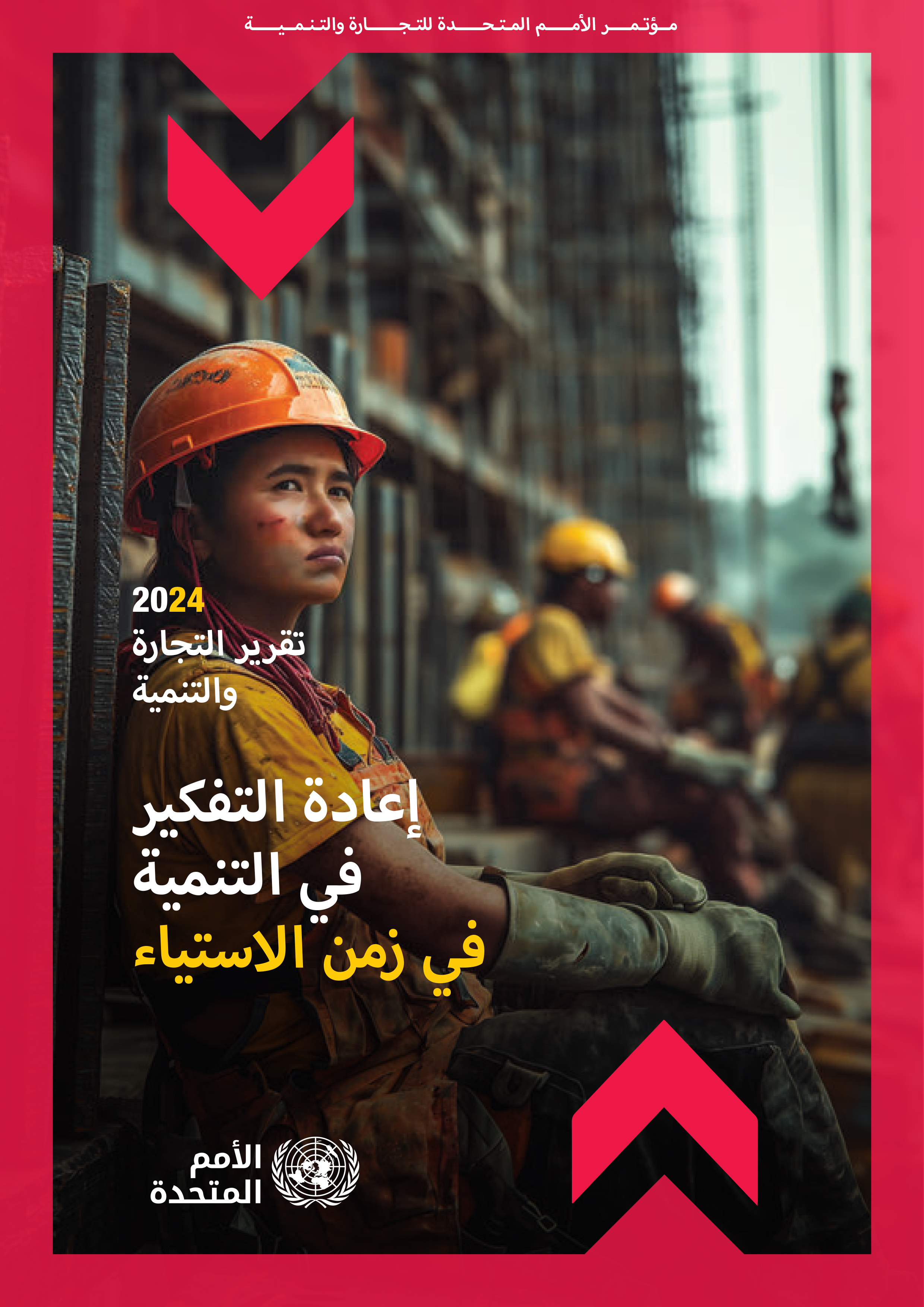
تقرير التجارة والتنمية 2024
إعادة التفكير في التنمية في زمن الأستياء
The Trade and Development Report 2024 forecasts global growth in gross domestic product of 2.7 per cent for 2024 and 2025, marking three consecutive years below the 3 per cent pre-pandemic growth trend. Regionally, South Asia displays the most dynamic growth. The three major powers of the global economy – China, the United States of America and the European Union – are on decelerating or weakened growth trajectories. Despite the context of a turbocharged technological revolution, the much-needed acceleration in economic activity to achieve the Sustainable Development Goals remains elusive for many countries in the global South trapped by a confluence of high debt burdens, financial and resource outflows, weak investment and enforced austerity. Only 1 of the 46 least developed countries is currently meeting the promise of a 7 per cent annual growth target under the global Goals.
تقريراولاتلتجنميارة ة2023
النمو، والدين، والمناخ:إعادة ترتيب الهيكلالمالي العالمي
The Trade and Development Report 2023 analyses current economic trends and major policy issues of international concern and makes suggestions for addressing these issues at various levels. The report warns that the global economy is stalling, with growth slowing in most regions compared with last year and only a few countries bucking the trend. The global economy is at a crossroads, where divergent growth paths, widening inequalities, growing market concentration and mounting debt burdens cast shadows on the future. The prospect of meeting the Sustainable Development Goals (SDGs) by 2030 is fading as a combination of rising interest rates, weakening currencies and slowing export growth squeezes the fiscal space needed for governments to fight climate change and provide for their people. The report calls for a change in policy direction – including by leading central banks – and accompanying institutional reforms promised during the COVID-19 crisis to avert a lost decade. It urges global financial reforms, more pragmatic policies to tackle inflation, inequality and sovereign debt distress, and stronger oversight of key markets. The report proposes actions to get the global economy moving in the right direction by using a balanced policy mix of fiscal, monetary and supply-side measures to achieve financial stability, boost productive investment and create better jobs.
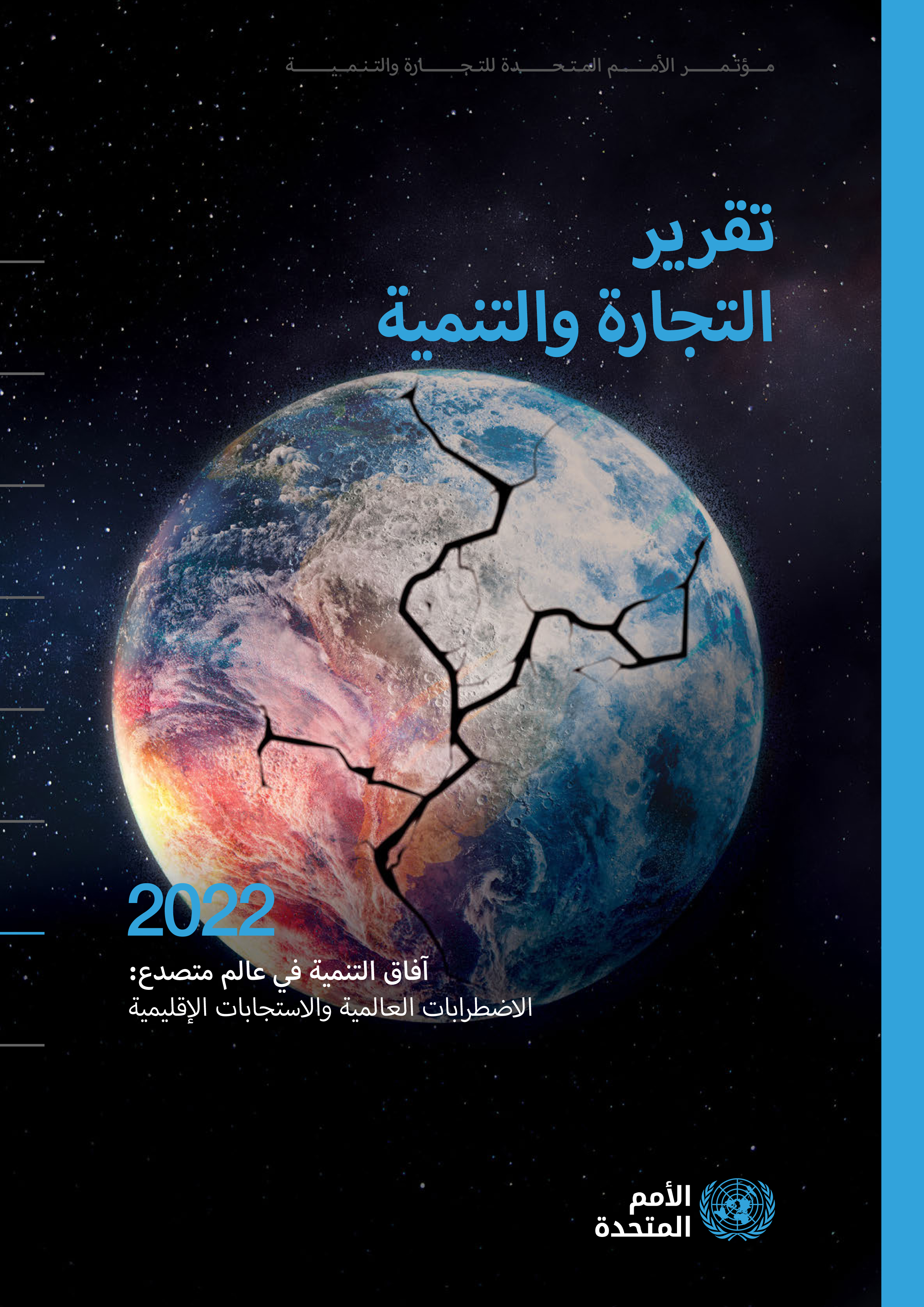
تقرير التجارة والتنمي ة 2022
آفاق التنمية في عالم متصدع: الإضطرابات العالمية والإستجابات ا إ لإقليمية
The Trade and Development Report 2022 analyses current economic trends and major policy issues of international concern, and makes suggestions for addressing these issues at various levels. This year report emphasizes that structural imbalances and inequalities in the global macroeconomic environment have grown since the global financial crisis and have intensified further with the Covid-19 pandemic. With less than a decade to meet the Agenda 2030, the Trade and Development Report 2022 finds that current policy trends could imperil the progress of developing countries towards inclusive and sustainable development. While improved policy coordination is needed at the multilateral level to better address the vulnerabilities facing developing countries, scaling up and strengthening regional arrangements can also help widen the opportunities from closer economic integration.
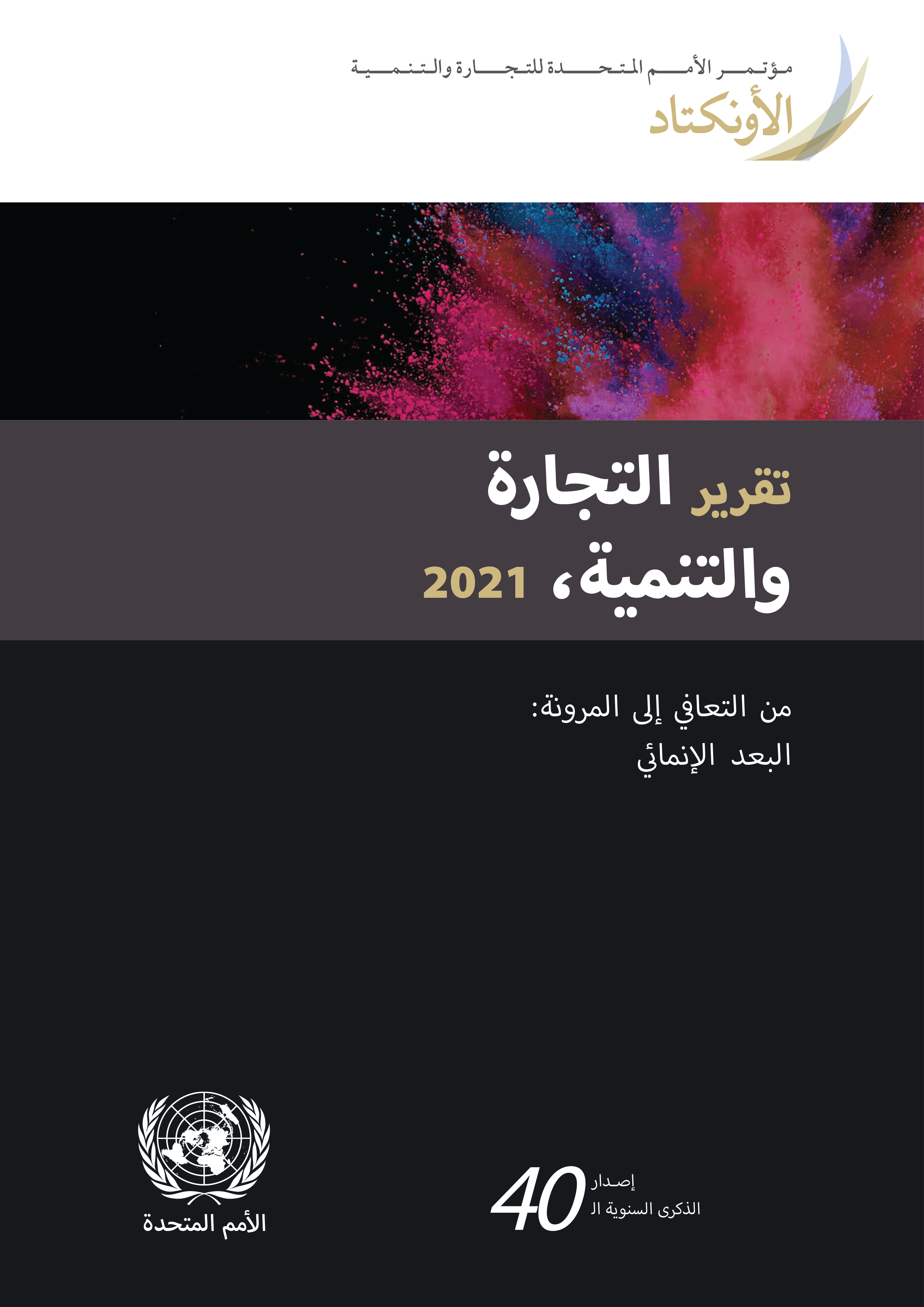
تقرير التجارة والتنمية، 2021
من التعافي إلى المرونة: البعد اإلإنمائي
This report analyses the state of the world economy, a year and half after the Covid-19 outbreak was declared a pandemic by the World Health Organization. The first part of the Report outlines key macro-financial aspects of the global economy, focusing, in particular, on the prospects for a growth recovery while analyzing possible threats from public and private debt, from inflationary spikes as well as from a return to the policies of the past. It pays particular attention to the situation of developing countries in the system of global finance, and discusses issues of debt sustainability. As this year marks its 40th anniversary, the Report also revisits the analyses provided in previous editions in response to shocks, setbacks, and crises that have hampered development during the era of hyperglobalization and underscores its abiding call for an inclusive global economic governance. The second part focuses on climate adaptation. It calls for a transformative approach to climate adaptation, with large-scale public investment programmes to adapt to future as well as current threats, and green industrial policies to drive growth and job creation. It also details reforms of the international financial system needed to get more climate adaptation funds flowing to developing countries.
تقرير التجارة والتنمية، ٢٠١٨
اللطة ومتعات الانطلاق ووهم حرية التجارة
This flagship publication examines different aspects of the nature and role of international trade in the era of hyperglobalization and considers related policy challenges that will need to be addressed if trade is to contribute to a more stable and inclusive global economic order. Research provides authoritative data and analysis on trade, investment, finance and technology. UNCTAD offers solutions to the major challenges facing developing countries, particularly the poorest and most vulnerable nations. Beyond tailored analysis and policy recommendations, UNCTAD research also generates global standards that govern responsible sovereign lending and borrowing, investment, entrepreneurship, competition and consumer protection and trade rules.