SME Competitiveness Outlook
SME Competitiveness Outlook highlights needs to recognize the impact of small and medium-sized enterprises (SMEs) on inclusive economic growth to close global productivity gaps. SMEs are the missing link to sustainable economic growth and are fundamental to addressing inequality and ensuring greater inclusiveness. SME Competitiveness Outlook highlights country-specific constraints most relevant to business success by breaking them down into three key pillars: the ability of SMEs to connect, compete and change. The publication analyses these determinants of SME competitiveness at the level of companies, their business environment, and national policy.
Filter :
Sustainable Development Goals
主题
出版日期
SME Competitiveness Outlook 2025
A Digital Transformation Roadmap
This SME Competitiveness Outlook sets out what a digital transformation looks like for small and medium-sized enterprises. Featuring insights from the International Trade Centre’s new Enterprise Digital Transformation Index, a metric that assesses how firms are adopting new technologies, it shows what challenges or circumstances may hold these businesses back in an increasingly digital age. The report also identifies the key enablers for firms to digitally transform– infrastructure, skills and regulations – while setting out what they can do when these enablers are absent to make up for what the environment lacks. The report unveils a Digital Transformation Action Plan for decision makers at the national and international levels. This roadmap provides a menu of options that decision makers can adopt depending on a country’s needs and circumstances – and reflects the key elements that must be in place to ensure that firms can benefit fully from the digital economy, and that no one is left behind.
SME Competitiveness Outlook 2023
Small Businesses in Fragility: From Survival to Growth
This SME Competitiveness Outlook assesses the impact of conflict and fragility on business performance. It unveils a Fragility Exposure Index, and shows that fragility, as experienced by firms, can be reduced by 25% if they take actions to reinforce competitiveness. These include engaging with business support organizations, improving financial management and retaining skilled staff. The report finds that direct support to firms is helpful and must be complemented by reforms to promote peace and stability and improve the business environment. Humanitarian partners, development agencies and capable state institutions must collaborate, coordinate and have a deep understating of the context to avoid reinforcing the drivers of fragility, and maximize positive outcomes.
SME Competitiveness Outlook 2022
Connected Services, Competitive Businesses
Our services sectors are key to an economic transformation. This report calls them ‘connected services. Transport and logistics, financial services, information and communication technologies, and business and professional services contribute directly to economic growth – with an increasing share of output, trade and jobs. These sectors also contribute indirectly, making other firms more competitive by connecting them to global value chains and digital innovations. For example: in regions with high quality connected services, 44% of all companies' export, compared with 19% of firms where the quality of connected services is lower. Connected services spur inclusive growth that is favorable for small businesses, including those led by women and young people. Yet most small firms in developing countries do not access them easily. This report explores the measures that companies, business support organizations and policymakers must take to help connected services flourish – to benefit all firms, foster more prosperous economies and build more inclusive societies.
SME Competitiveness Outlook 2021
Empowering the Green Recovery
The SME Competitiveness Outlook 2021 analyses how small businesses can rebuild from the COVID-19 (coronavirus) pandemic so they are better prepared to face the looming crisis of climate change. It provides a 20-point Green Recovery Plan to foster competitive, resilient and environmentally sustainable small and medium-sized enterprises (SMEs). The report finds that firms owned by women and young people were hurt more by the pandemic and are more vulnerable to future shocks, such those brought by a changing climate. It shows how business support organizations, governments, lead firms in value chains and international organizations can enable SMEs to strengthen competitiveness, build resilience to climate hazards and contribute to safeguarding the planet.
SME Competitiveness Outlook 2020
COVID-19: The Great Lockdown and its Impact on Small Business
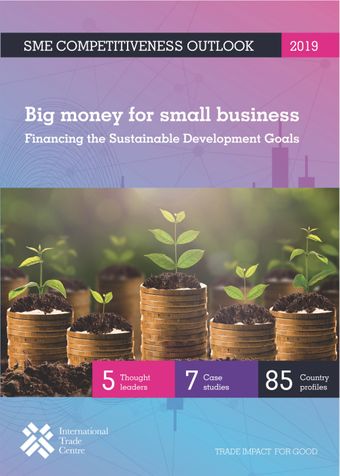
SME Competitiveness Outlook 2019
Big Money for Small Business - Financing the Sustainable Development Goals
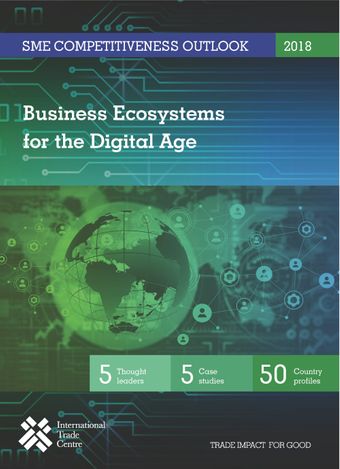
SME Competitiveness Outlook 2018
Business Ecosystems for the Digital Age
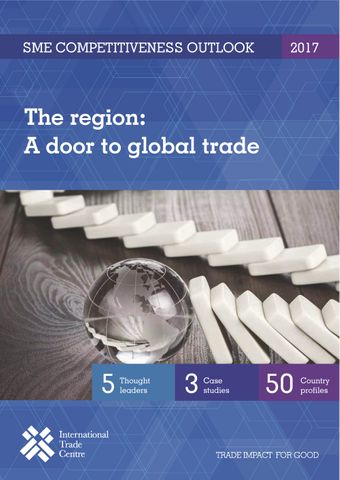
SME Competitiveness Outlook 2017
The Region - A Door to Global Trade
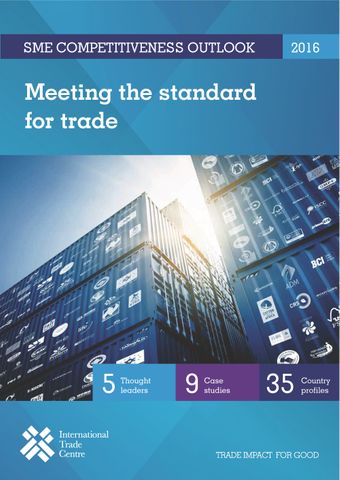
SME Competitiveness Outlook 2016
Meeting the Standard for Trade