Masḥ al-taṭawwurāt al-iqtiṣādiyyaẗ wa-al-iğtimāʿiyyaẗ fī al-minṭaqaẗ al-ʿarabiyyaẗ
Filter :
Sustainable Development Goals
موضوع
تاريخ النشر
مسح التطورات الاقتصادية والاجتماعية في المنطقة العربية 2023–2024
تتناول نسخة 2023-2024 من مسح التطورات الاقتصادية والاجتماعية في المنطقة العربية الأوضاع الاقتصادية على الصعيدين الإقليمي والعالمي. وتأثرت مجريات الأمور بشدة بالحرب الدائرة في أوكرانيا، علاوة على استمرار عدم اليقين في المنطقة العربية بسبب الحروب على غزة ولبنان. والتوقعات للاقتصاد الكلي العالمي لعام 2025 إيجابية إلى حد ما، حيث من المتوقع أن يستمر التعافي بعد جائحة كوفيد-19، لا سيما في آسيا. ويحيط غموض شديد بالآفاق المستقبلية للمنطقة العربية، حيث تطغى على المشهد تحديات جسام، تشمل الحروب والصراعات وعدم الاستقرار السياسي والتحديات الاجتماعية والاقتصادية والكوارث الطبيعية. ومن المتوقع أن تشهد السنوات المقبلة تراجعاً بطيئاً في مستويات الفقر في المنطقة العربية عن مستوياتها المرتفعة إبان الجائحة. ولم تذلل العقبات بعد أمام تحقيق المساواة بين الجنسين في المنطقة العربية. في عام 2024، كانت الفجوة بين الجنسين في المنطقة العربية هي الأوسع في العالم، وتتفاوت كثيراً معدلات مشاركة الرجال ومشاركة النساء في القوى العاملة.
مسح التطورات الاقتصادية والاجتماعية 2020-2019
وقائع وآفاق في المنطقة العربية
This annual flagship publication seeks to both analyze routinely monitored economic and social variables in the Arab region in a global context as well as address debt sustainability and the macroeconomic implications. Given that the COVID-19 pandemic will have significant repercussions in 2021 and beyond, it is crucial to understand how Arab countries are dealing with the economic impact of the virus. The report sets out two scenarios: a baseline scenario projecting that the economy will rebound in the first quarter of 2021; and a pessimistic scenario in which the crisis will persist throughout the first quarter of 2021. However, given considerable advancements in research on COVID-19 vaccines, an economic rebound should be expected no later than the second quarter of 2021.
مسح التطورات الاهتعادية والاجتماعية في المفظعة العربية 2019-2018
The Survey 2018-2019 observes that the Arab region experienced an economic recovery with a growth rate of 2.3% in 2018, up from 1.7% the year before. This recovery was largely attributed to hydrocarbon sector-led growth in the region’s oil-exporting countries, particularly GCC countries. This growth momentum will continue at a modest pace of 2.6% in 2019 and further increase to 3.4% for 2020. Notwithstanding such positive prospect, the region remains linked to geopolitical uncertainties, which are further exacerbated by a number of ongoing intraregional diplomatic rifts and armed conflict. Meanwhile, the Survey 2018-2019 claims that the main challenge facing nowadays the region is its delicate fiscal situation as several Arab countries have already established new energy subsidy systems, aimed at maintaining affordable energy prices against oil price fluctuation. Employing CGE models, the Survey 2018-2019 demonstrates that reducing energy subsidy generates a fiscal space for governments. If the ‘saved’ amounts are totally directed to the reduction of fiscal deficit, fiscal sustainability could be enhanced but economic growth and job creation will be negatively affected. Such simulation result allows policymakers to assess the reform options that promote an inclusive and sustainable development.
مسح التطورات الاقتصادية والاجتماعية في المنطقة العربية 2017-2018
مسح التطورات الاقتصادية والاجتماعية في المنطقة العربية 2016-2017
مسح التطورات الاقتصادية والاجتماعية في المنطقة العربية 2016-2015
The economic and political uncertainty which has characterized the Arab region in the wake of the 2011 transitions and upheaval continues to restrain the region’s prospects for growth, job creation and stability. Economic expansion remains stalled, with persistently low global oil prices adding a further burden to the regional economy and constraining the growth and fiscal balances of those countries that had been top-performers due to energy exports. While some progress on social indicators such as gender representativeness can be noted, countries in and affected by political transition and conflict have regressed on a plethora of socioeconomic indicators. These trends can be noted for the past five years, and with this in mind, the 2015-16 Survey will utilize recent data in order to take stock of the impact of instability and conflict, and address the foregone growth and output and destructive effects of this period. It also draws on recent research of ESCWA regarding migration, social developments, the impact of conflict, women’s empowerment, and specific country-level analysis.
العربية 2014-2015 (اللغة العربية)والاجتماعية في المنطقةدراسة التطورات الاقتصادية
مسح التطورات الاقتصادية والاجتماعية في المنطقة العربية 2014-2013
مسح التطورات الاقتصادية والاجتماعية في المنطقة العربية 2013-2012
مسح التطورات الاقتصادية والاجتماعية في منطقة الإسكوا 2011-2012
مسح التطورات الاقتصادية والاجتماعية في منطقة الإسكوا 2011-2010
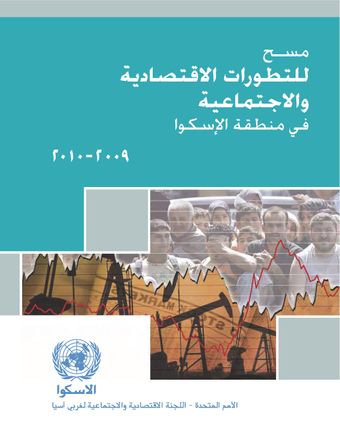
مسح للتطورات الاقتصادية والاجتماعية في منطقة الإسكو 2010-2009
مسح للتطورات الاقتصادية والاجتماعية في منطقة الإسكوا 2008-2007
مسح للتطورات الاقتصادية والاجتماعيةفي منطقة الإسكوا 2007-2006
مسح للتطورات الاقتصادية والاجتماعية في منطقة الإسكوا 2006-2005