


International Trade Forum - Volume 2020, Issue 3, 2020
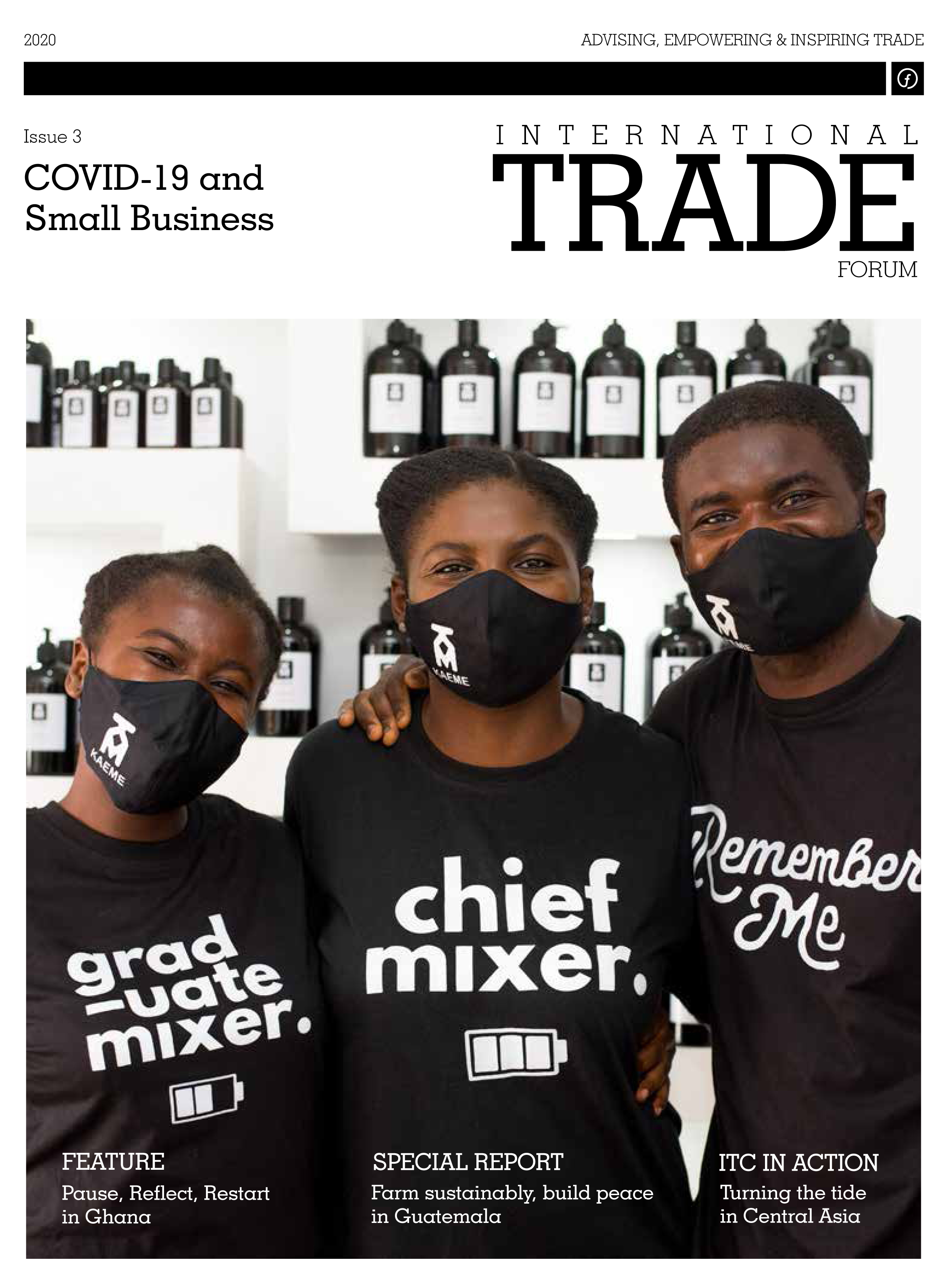
Volume 2020, Issue 3, 2020
-
-
Stories of resilience
More LessAuthor: DOROTHY TEMBOThe COVID-19 pandemic has caused an unparalleled global health crisis and disrupted every aspect of society and business, putting the world’s economic activity under stress.
-
-
-
Pause, Reflect, Restart: How one Ghanaian Company is staying afloat in a crisis
More LessAuthor: EVELYN SELTIERLocal and natural – Freda Obeng- Ampofo would have it no other way. As long as the owner of Ghanaian cosmetics line KAEME can remember, she has been using shea butter and black soap (roasted cocoa pods, plantain bark and coconut oil) as her only two care products.
-
-
-
African growth: A new model for a post-COVID-19 world
More LessAuthor: WAMKELE MENEThe coronavirus pandemic has triggered a new economic paradigm that is as unprecedented and radical as the Great Depression. Although the economic consequences of this global crisis are still unfolding, its impact on African economies is already alarming.
-
-
-
Bridging the digital divide
More LessAuthor: JOSÉ LUIS CANCELAA century ago, when pandemic influenza struck a war-torn world, few multilateral institutions existed. Countries fought their common microbial enemy alone. Today, an array of multilateral mechanisms exists to confront global public health emergencies and address their economic, social, and political effects. The global nature of the current pandemic requires a global response. Let us make sure we leverage existing multilateral mechanisms to help fight the virus and overcome the current crisis.
-
-
-
Saving our small businesses
More LessAuthor: JOHN WH DENTON AOIn many economies, micro, small and medium-sized enterprises either are the economy or account for a huge proportion of economic and employment activity.
-
-
-
Chambers: The first recourse for small businesses
More LessAuthor: DENIS DESCHAMPSChambers are agile and reliable intermediaries between small businesses and public authorities. The COVID-19 pandemic has highlighted their central role of providing immediate support to businesses and advising administrations and public authorities.
-
-
-
Removing barriers to growth through digital deal-matching
More LessAuthor: BRIAN PALLASFor decades, business leaders have cultivated ecosystems centered on the potential to do business. Taking the form of social clubs, networking events, industry conferences and professional networks, these ecosystems create a hub of powerful investors, influential partners and top talent. However, barriers such as revenue thresholds, geographic location or lack of personal connections often keep small businesses from accessing these ecosystems, making it difficult for them to seek growth opportunities.
-
-
-
Farm sustainably, build peace
More LessAuthor: EVELYN SELTIEREdgar Montenegro is worried about the farmers he works with in the remote region of Putumayo: getting to this part of Colombia, which borders Peru and Ecuador and is 500 km from Bogotá, is already a hike on normal days. Now with COVID-19 and the country’s lockdown over the past few months, the region is barely accessible. Villagers are putting up barricades because they are scared. With no hospitals around, they do not wish to risk infection.
-
-
-
Our employees make it possible
More LessAuthors: SWE YI and JENS-UWE PARKITNYMyanmar reported its first case of COVID-19 on 23 March. The government responded with restrictions to prevent the virus from spreading: banning mass gatherings, suspending visas, issuing stay-at-home orders, quarantining, promoting social distancing and imposing legal actions against those who broke the new laws. It seems that thanks to these prompt actions, the case numbers remained low. But the economic impact for businesses, especially for restaurants and hotels, was devastating.
-
-
-
Writing Tanzania’s success story
More LessAuthor: ZLATAN MILIŠICWho could have predicted what was in store for all of us in 2020?
-
-
-
Turning the tide
More LessAuthors: WAQAS RAFIQUE and MARIANA ALVES TAVARESSaparbek Asanov is the President of the Association of Light Industry Enterprises of Kyrgyzstan, Legprom. According to him, textile and clothing companies in Kyrgyzstan have suffered a severe blow from the coronavirus. Out of 1000 factories in the capital Bishkek, only around 17 have managed to continue operations.
-
-
-
E-learning: The way to go
More LessAuthors: WAQAS RAFIQUE and SHAUN LAKEMahfuzul, an aspiring entrepreneur from Bangladesh, has no doubt that he will be able to turn his dream of running his own business into reality.
-
-
-
Urban logistics in Guinea
More LessAuthors: WAQAS RAFIQUE and WATHIRA MBAGEI will be forced to close some of the sales points and cut wages to keep my workers. Increasing costs for raw materials and the need to maintain my business prices have left me with no choice,’ says Mamoudou Barry.
-
Volumes & issues
Most Read This Month
