Gendered Assessment of Socioeconomic Impacts of Migration on Families Staying Behind in the Gambia
Abstract
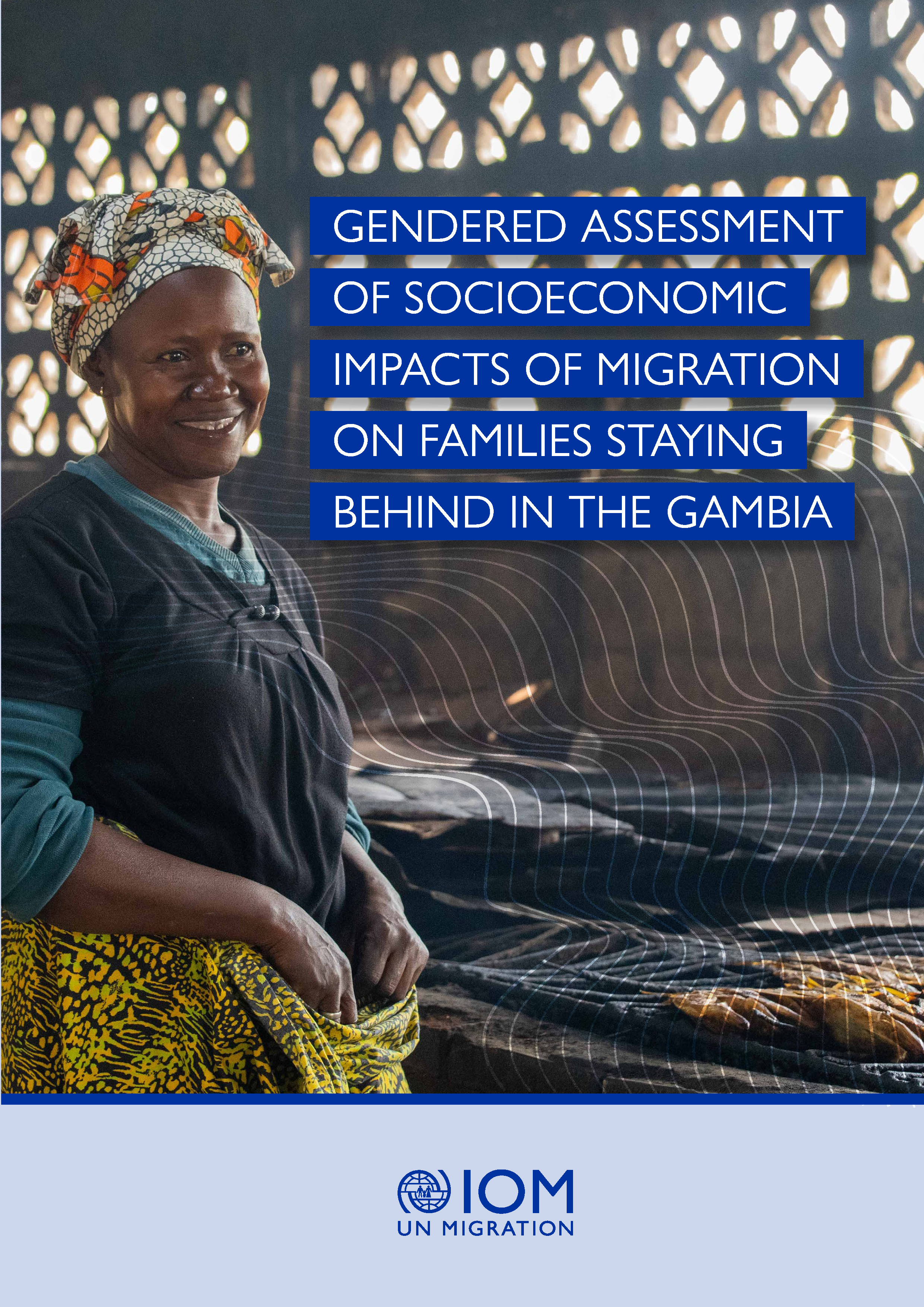
This report presents findings from a nationwide study assessing the gendered socioeconomic impacts of migration on families staying behind in the Gambia. It showcases how migration reshapes household dynamics, placing heightened economic and caregiving responsibilities on women, unsettling children’s education and emotional well-being, and shifting traditional gender roles. Women often face limited decision-making power, social isolation and heightened vulnerability to gender-based violence. The study shows that while remittances offer financial relief, they are not a uniform solution, and many families struggle with employment, housing and access to health care. Through varied research methods, the report underscores the need for gender-responsive policies, community-based support systems and targeted interventions – such as vocational training, financial literacy, psychosocial support and legal aid – to empower women and youth, reduce irregular migration and promote inclusive development. The findings call for urgent action to strengthen resilience and equity among families affected by migration.