Investment Policy Review - Tajikistan
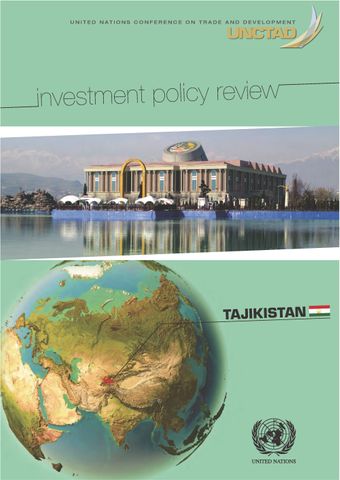
Abstract
More than a decade of high economic growth has contributed to poverty reduction in Tajikistan. Following independence, the country suffered significant economic losses and social costs, which were compounded by the consequences of the civil war that ended in 1997. Since that time, peace and political stability have been consolidated, and Tajikistan has adopted a reform agenda to progressively enhance its development prospects. The reforms contributed to higher economic growth rates and positive social development. For instance, since 2000, gross domestic product (GDP) growth averaged about 8 per cent, contributing to significant poverty reduction, and the inflation rate fell from close to 40 per cent in 2001 to 6 per cent in 2014 (World Bank, 2015a).