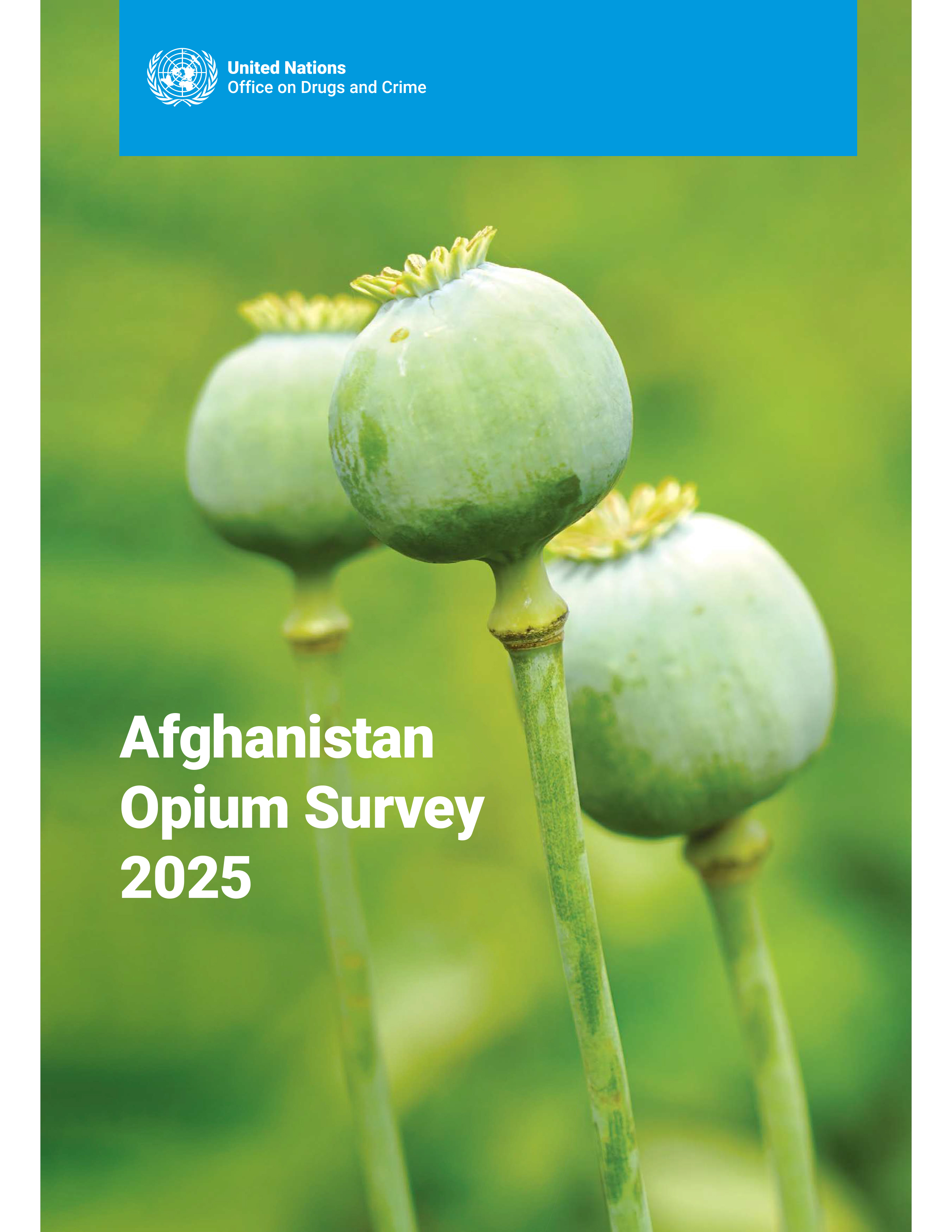
Afghanistan Opium Survey 2025
Abstract
Opium poppy cultivation in Afghanistan in 2025 decreased by 20 per cent compared to the previous year, according to a new survey from the United Nations Office on Drugs and Crime (UNODC). The sharp contraction, together with market indicators, suggest that opium production and trafficking are undergoing major shifts in the region. The total area under opium poppy cultivation in 2025 was estimated at 10,200 hectares, 20 per cent lower than in 2024 (12,800 hectares) and a fraction of the pre-ban levels recorded in 2022, when an estimated 232,000 hectares were cultivated nationwide. Accordingly, opium production has also declined in 2025, at a rate even greater than that of cultivation, dropping by 32 per cent compared to 2024, to an estimated total of 296 tons. Farmers’ income from opium sales fell by 48 per cent from US$260 million in 2024 to US$134 million in 2025. After the ban, many farmers shifted to growing cereals and other crops. Worsening weather conditions, such as droughts or low rainfall, however, resulted in over 40 per cent of farmland laying barren. Simultaneously, the return of approximately four million Afghans from neighbouring countries, representing by now around 10 per cent of the country’s population, has intensified competition for scarce jobs and resources. All these factors, paired with the reductions in humanitarian aid can possibly make opium poppy cultivation more attractive.