- E-ISSN: 16840348
-
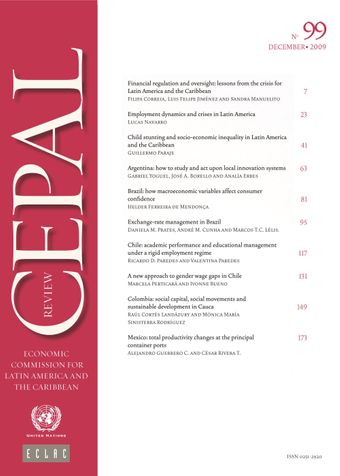
Financial regulation and oversight: Lessons from the crisis for Latin America and the Caribbean
- Source: CEPAL Review, Volume 2009, Issue 99, Dec 2009, p. 7 - 22
- Spanish
-
- 29 Dec 2009
Abstract
The analysis of the financial crisis that broke out in the United States in mid-2008 gave rise to a vigorous debate about the role of financial regulation and oversight. The present article briefly analyses the crisis with a particular emphasis on these subjects, with the goal of suggesting some lessons that can be drawn from it for Latin America and the Caribbean. Accordingly, it describes the economic conditions and major changes that occurred in the financial system of the United States during the 1990s and the current decade, identifying the contribution of these factors to the crisis. The initial lessons drawn from this analysis are the need to: (i) consider macroprudential risk in the regulatory framework, (ii) reduce the procyclical bias of the system, (iii) widen the scope of regulation and (iv) deal with the conflicts of interest that prevent prompt and reliable disclosure of the risk taken on by financial institutions.