- E-ISSN: 26178419
-
Wellbeing budgeting: a case study of New Zealand
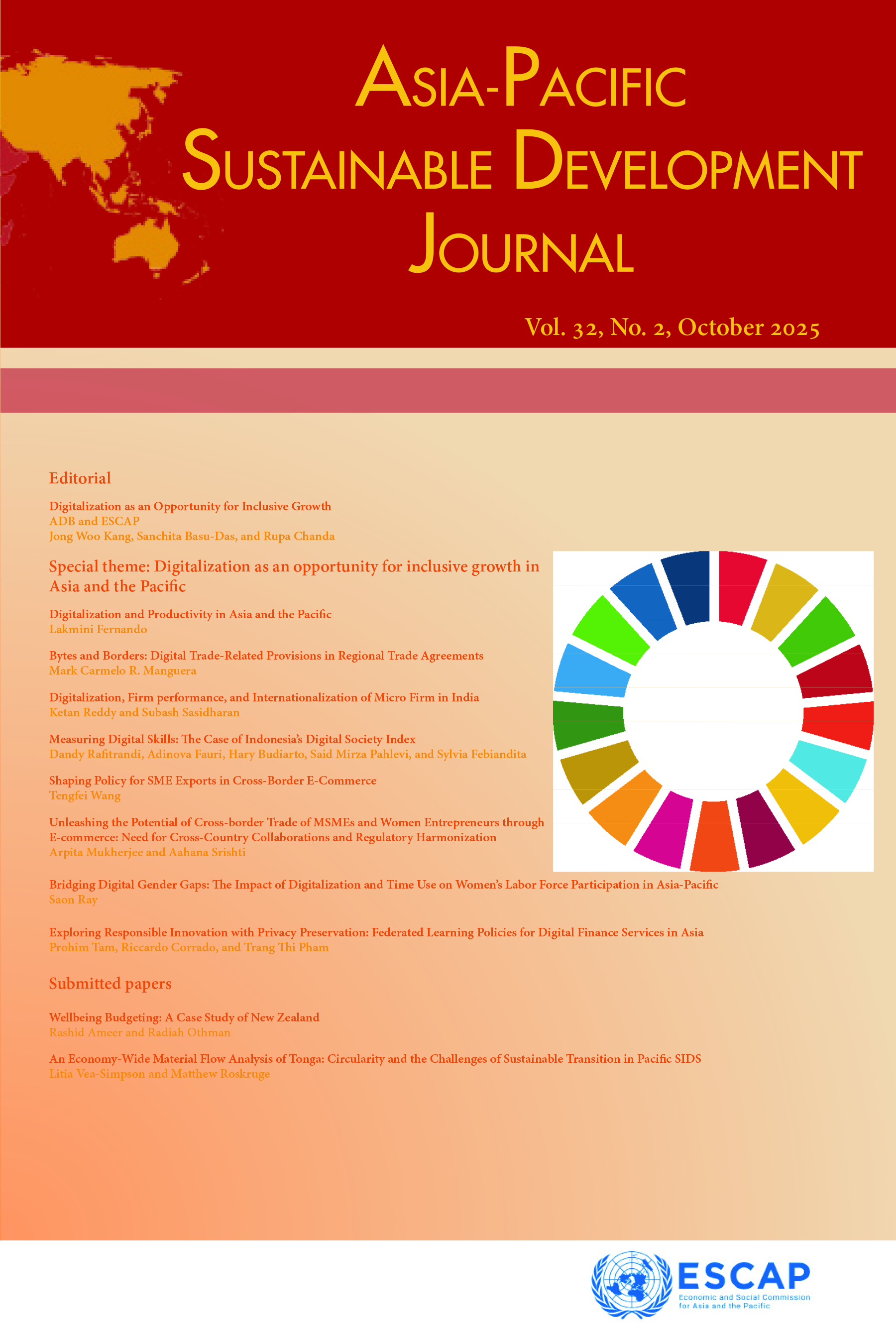
- Source: Asia-Pacific Sustainable Development Journal, Volume 32, Issue 2, дек. 2025, p. 243 - 281
-
- 22 дек. 2025
Abstract
In this study, the author reviews the wellbeing budgets of the government of New Zealand (2019 to 2023) in education, health, housing and social development. Health spending was efficient; however, the variances in education and housing were unfavourable due to a policy hangover, underfunding and a costly national homelessness strategy. The “Well Child Tamariki Ora” programme showed mixed results with regional disparities. Pre-wellbeing budgets were focused on immediate outcomes, neglecting long-term wellbeing. Following the introduction of wellbeing budgets, collaboration increased, especially for Māori, but regional healthcare access issues persisted. Social development overspend was attributable to housing support and pandemic aid. The study highlights the need for coordinated efforts across ministries and budgeting for uncertainties.