- E-ISSN: 16840348
-
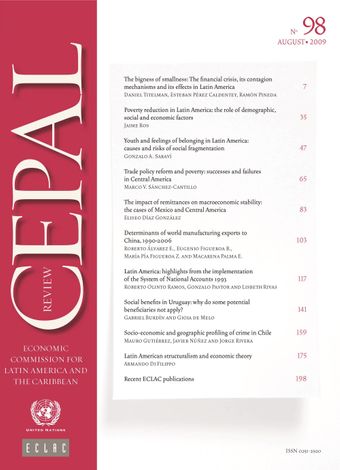
Social benefits in Uruguay: Why do some potential beneficiaries not apply?
- Source: CEPAL Review, Volume 2009, Issue 98, نوفمبر ٢٠٠٩, p. 141 - 158
- الإسبانية
-
- ٠٣ نوفمبر ٢٠٠٩
Abstract
Cash transfer programmes have become very important in Latin America. Concerns about proper targeting have centred on excluding people who do not meet eligibility requirements. Less attention has been paid to the failure of programmes to reach the whole of their target population, partly because there are people who do not even apply. The present article analyses the determinants of non-take-up of social benefits. The case studied is the National Social Emergency Plan, an income transfer programme implemented in Uruguay between 2005 and 2007. It is calculated that over a fifth of eligible households have never enrolled in the programme. A probit model is used to estimate the determinants of the decision to apply. The evidence obtained is highly consistent with theoretical and empirical research into the subject.