- E-ISSN: 16840348
-
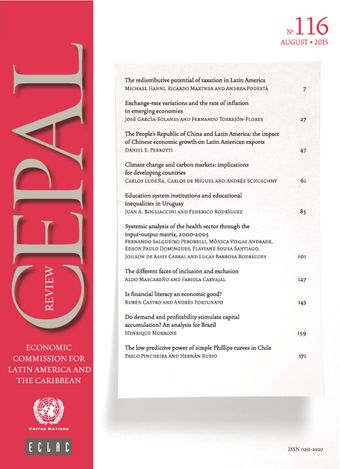
The different faces of inclusion and exclusion
- Source: CEPAL Review, Volume 2015, Issue 116, août 2015, p. 127 - 141
- Espagnol
-
- 28 mars 2016
Abstract
The notions of inclusion and exclusion have a long tradition in sociology, but have gained significant currency more recently in public policy analysis. However, a certain conceptual inflexibility arises when the distinction is applied to complex social situations. This article examines the main approaches to inclusion/exclusion in the sociological tradition, systems theory and the theory of new inequalities. On this basis, five interrelated situations of inclusion and exclusion are constructed: self-inclusion/self-exclusion, inclusion by risk/ exclusion by danger, compensatory inclusion, inclusion in exclusion and sub-inclusion. They are illustrated with specific examples to refine an analytical approach to problems of inclusion and exclusion, with a view to contributing to sociological analysis and to assessing the consequences of public and private decisions.
© United Nations