- E-ISSN: 16840348
-
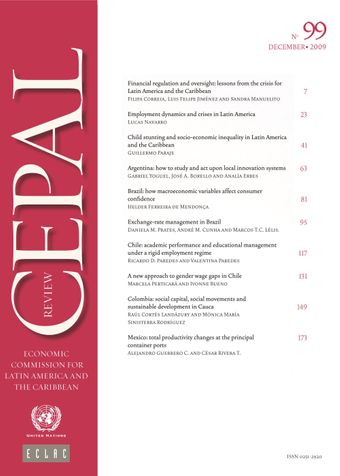
Exchange-rate management in Brazil
- Source: CEPAL Review, Volume 2009, Issue 99, Dec 2009, p. 95 - 115
- Spanish
-
- 29 Dec 2009
Abstract
This paper examines four hypotheses: (i) in Brazil, as in other peripheral countries in the post-crisis context, a policy choice appears to have been made for a flexible exchange rate within a currency band (“dirty float”); (ii) the underlying reasons for this policy appear to have more to do with pass-through of exchange-rate variations and precautionary demand for reserves than with the maintenance of a competitive real exchange rate; (iii) in the country’s peculiar situation, considerable capital mobility is conjoined with large and liquid financial derivatives markets and a reserves build-up policy that carries a high fiscal cost; (iv) until April 2006, reserves accumulated in much the same way under the floating exchange-rate system as they had under the currency band regime; there have been changes since then owing to the rapid growth of reserves.