


The UNESCO Courier - Volume 2025, Issue 2, 2025
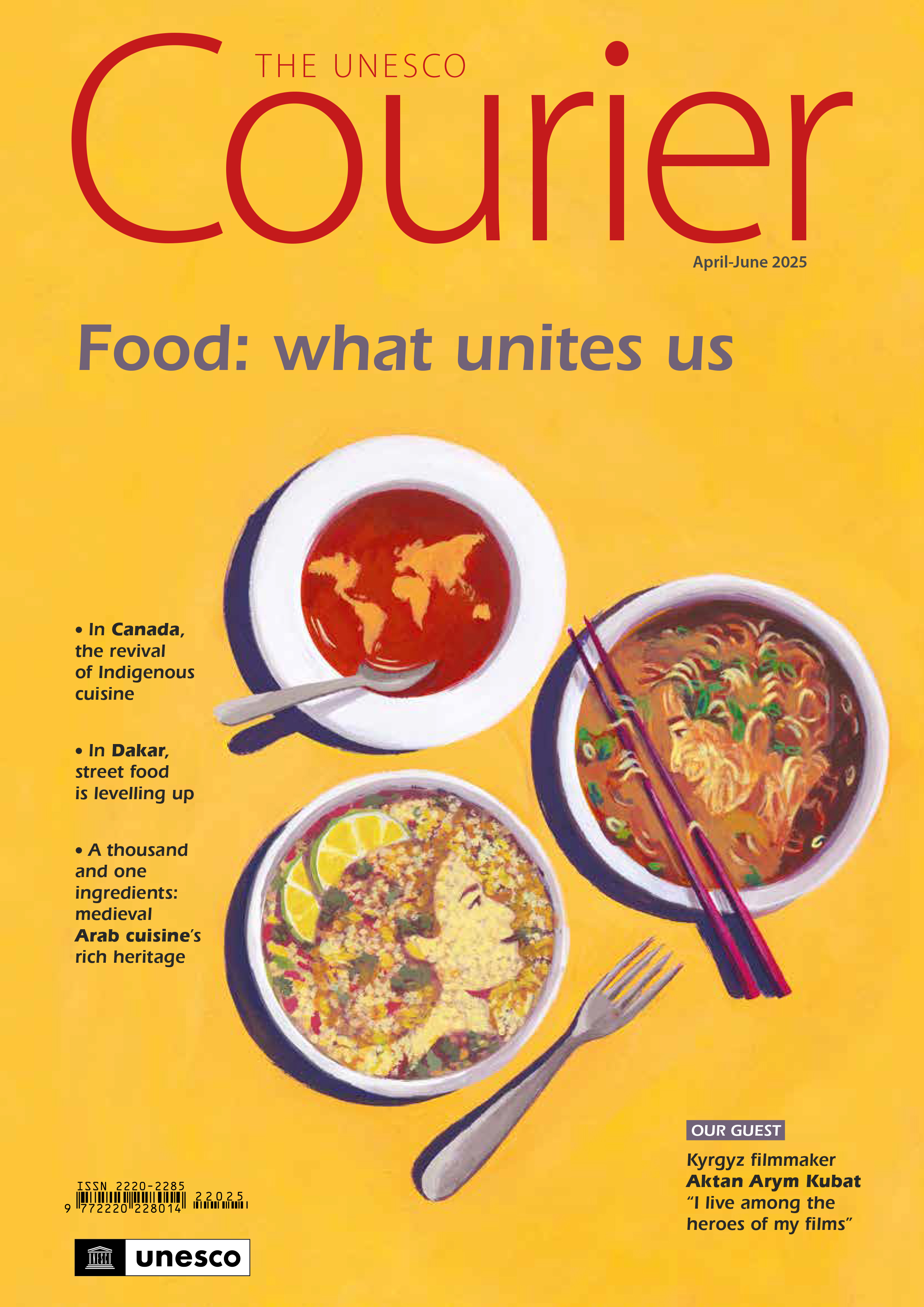
Volume 2025, Issue 2, 2025
-
-
Reconnecting with food
More LessOver the last few decades, our food system has undergone profound changes.
-
-
-
The future on our plates
More LessFrom lab-grown meat to insects and microalgae, alternative protein sources are being explored to meet the needs of eight billion people. But for these foods to become mainstream, one obstacle must be overcome: our deep-rooted fear of novelty.
-
-
-
Two chefs come together for a good cause
More LessA sense of responsibility, a burst of creativity, and a desire to harness gastronomy to promote a greener world. These are some of the driving forces behind Michelin-starred chefs Mauro Colagreco, chef at Mirazur in Menton (France), and Daniel Humm, chef at Eleven Madison Park in New York (United States). As UNESCO Goodwill Ambassadors they raise awareness about the considerable impact our food choices have on our health and that of the planet.
-
-
-
Chile, pioneer of food labelling
More LessFaced with one of the highest obesity rates in the world, Chile was the first country to pass a law on labelling foods high in ingredients harmful to health.
-
-
-
Food and intangible heritage, a flavourful relationship
More LessSome fifty traditional culinary practices are inscribed on UNESCO’s lists of intangible cultural heritage.
-
-
-
In Canada, the revival of Indigenous cuisine
More LessProjects led by First Nations communities in Canada seek to revive ancient practices and recipes that respect the sacred dimension of food and are more sustainable. Among them are the Mi’kmaq of Nova Scotia.
-
-
-
Peter Singer: Considering animals as commodities seems completely wrong to meŽ
More LessAnimals raised on factory farms often live in deplorable conditions. Knowing this doesn’t stop us from eating meat. Why are we so indifferent to their suffering? Australian philosopher Peter Singer, one of the most influential intellectuals of his generation, has been addressing this blind spot in ethical thinking for more than fifty years. He has authored dozens of books, including Animal Liberation, a classic that continues to be a reference in the field of animal rights.
-
-
-
China: The story of a movable feast
More LessFive thousand years of Chinese culture of food and drink are on display in the exhibition “A Movable Feast: The Culture of Food and Drink in China” in Hong Kong. Its lead curator, art historian Nicole Chiang, explains how ancient food vessels reveal social practices and rituals that continue to resonate today.
-
-
-
Using AI to track down leftovers
More LessTo reduce food waste, catering kitchens and restaurants are using artificial intelligence (AI) to analyze the leftovers thrown into the garbage can. They can adapt their menus and purchase orders based on the data collected.
-
-
-
In Dakar, street food is levelling up
More LessThe residents of Senegal’s capital did not wait for street food to be trendy to adopt tangana, informal canteens that offer, at any time of day, snacks and dishes as tasty as they are cheap.
-
-
-
A thousand and one ingredients: Medieval Arab cuisines rich heritage
More LessAs the central hub of a vast network of civilizations, the medieval Muslim-Arab world left a legacy of recipes and cooking techniques that continue to impact global food traditions today.
-
-
-
Zoom: Saul Leiter, the master of colour
More LessSaul Leiter (1923-2013) never sought to conquer the world.
-
-
-
Do you speak animal?
More LessIt has been demonstrated by numerous studies that animals communicate with one another.
-
-
-
Our guest: Aktan Arym Kubat: “I live among the heroes of my films”
More LessA figurehead of Kyrgyz cinema since the early 1990s, Aktan Arym Kubat came to international attention with The Adopted Son in 1998.
-
Volumes & issues
Most Read This Month
